







What's Happening?
Noah Smith, a writer and founder of Noahpinion, suggests several ways to enhance Thanksgiving, aiming to transform it into a holiday that more deeply celebrates American identity and social connections. Smith acknowledges the holiday's existing strengths,
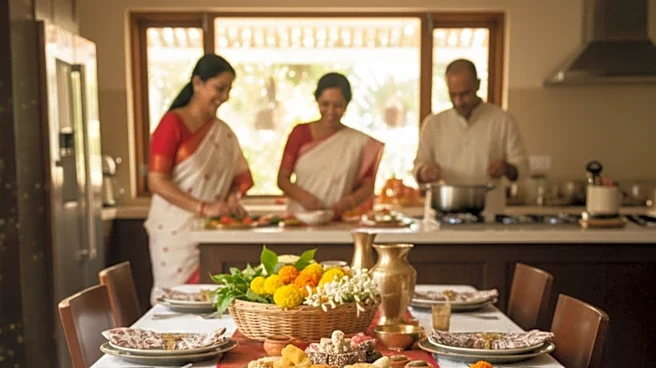
such as providing a long weekend for many and fostering family gatherings, but points out its weaknesses, including the frantic travel and a perceived lack of diverse traditions beyond the dinner itself. He proposes adding new traditions, such as gift-giving to acquaintances and associates, inspired by Japanese customs, to acknowledge broader social networks. Additionally, Smith advocates for more varied house decorations beyond Halloween and Christmas themes, suggesting creative lighting displays. A significant proposal involves diversifying the traditional Thanksgiving meal to include ethnic variants, reflecting America's immigrant heritage and globalized culinary landscape. He notes that 77% of Republicans agree the U.S. is a 'nation of immigrants,' underscoring the potential for such culinary integration to resonate widely.
Why It's Important?
Smith's proposals are important because they address the evolving cultural landscape of the United States and seek to make a foundational American holiday more inclusive and reflective of its diverse population. By suggesting the incorporation of global culinary traditions into Thanksgiving dinner, he highlights the nation's identity as a 'composite people, gathered from all corners of the Earth.' This shift could foster a greater sense of belonging and shared celebration among various ethnic groups, moving beyond a historically narrow interpretation of American heritage. The idea of gift-giving to acquaintances and broader social networks could strengthen community bonds and acknowledge the often-underappreciated importance of these relationships in daily life. Furthermore, diversifying holiday decorations could offer new avenues for creative expression and participation for those who may not connect with existing holiday themes, potentially boosting local economies through increased demand for new types of festive items.
What's Next?
The implementation of Smith's suggestions would likely depend on grassroots adoption and cultural shifts rather than top-down mandates. If these ideas gain traction, we could see a gradual evolution in how Thanksgiving is celebrated across the U.S. Food trends already show a move towards incorporating international flavors into traditional dishes, suggesting that 'ethnic variants' of Thanksgiving dinner could become more common. Chefs and food companies might increasingly offer globally inspired Thanksgiving meal kits or recipes. Similarly, if the concept of broader gift-giving or diverse decorations resonates, retailers could begin to market products tailored to these new traditions. The long-term impact could be a more inclusive and multifaceted Thanksgiving, better reflecting the modern American identity and fostering stronger community ties.
Beyond the Headlines
Beyond the immediate suggestions, Smith's article touches on deeper implications regarding national identity and cultural assimilation. By advocating for a Thanksgiving that celebrates 'the people that make up our country' and acknowledging immigration as central to America's story, he implicitly challenges traditional narratives that may not fully encompass the nation's diverse origins. The call for 'Mexican Thanksgiving dinner, Korean Thanksgiving dinner, Indian Thanksgiving dinner' is not merely about food; it's a symbolic embrace of multiculturalism within a core American institution. This could lead to a broader re-evaluation of how national holidays are observed, encouraging a more inclusive approach that honors the contributions and cultures of all Americans. Such a shift could also influence public discourse on immigration, framing it as a source of national strength and cultural richness rather than solely a policy challenge.