





What's Happening?
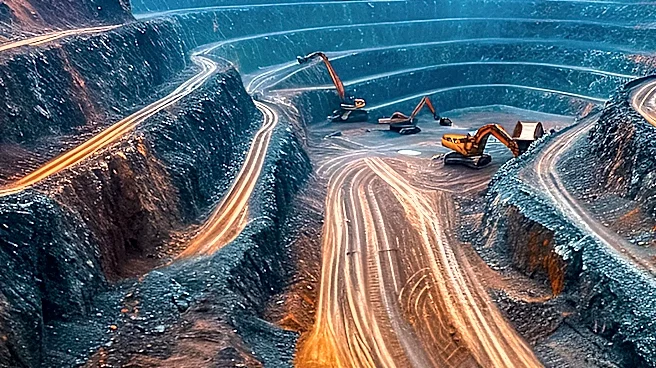
The Jianxiawo lithium mine, operated by Contemporary Amperex Technology Co. Limited (CATL), a major battery manufacturer, continues to be closed. This closure, initially attributed to maintenance work by state media, is actually due to an outstanding
environmental permit, as reported by Reuters in early August. The mine is recognized as the largest proven lepidolite lithium mine globally, with an estimated annual capacity of approximately 100,000 tons. Its prolonged shutdown could potentially impact CATL's raw material supply. Concurrently, CATL is actively pursuing the expansion of its sodium-ion battery technology, aiming to reduce its reliance on lithium mining. This strategic shift is part of a broader effort by the company to control its value chain, including implementing mandatory carbon reporting for suppliers and launching a direct-sales platform for energy storage integrators.
Why It's Important?
The continued closure of CATL's Jianxiawo lithium mine is significant because it highlights the environmental and regulatory challenges inherent in raw material sourcing for the rapidly expanding battery industry. Lithium is a critical component for electric vehicle batteries and energy storage systems, and disruptions in its supply can have ripple effects across global manufacturing and clean energy initiatives. For CATL, a leader in battery production, this shutdown could temporarily strain its raw material access, potentially affecting production costs and timelines. The situation also underscores the growing importance of diversifying battery chemistries, as evidenced by CATL's increased focus on sodium-ion batteries. This move could reduce dependency on lithium, offering a more sustainable and potentially cost-effective alternative, especially as global demand for batteries continues to surge.
What's Next?
The immediate next step for CATL will likely involve resolving the outstanding environmental permit issues to facilitate the reopening of the Jianxiawo lithium mine. The market is closely watching for the mine's resumption, as its restart could significantly alter supply expectations for lithium. In parallel, CATL is expected to continue its aggressive development and deployment of sodium-ion battery technology, with a target of 1 GWh delivery of its 'TENER' sodium-ion storage system by year-end. The company is also aiming for pilot production of solid-state battery cells by 2027, which could represent a significant leap in energy density. These technological advancements and diversification efforts are crucial for CATL to mitigate risks associated with raw material supply chain disruptions and maintain its competitive edge in the global battery market.
Beyond the Headlines
The situation at the Jianxiawo lithium mine extends beyond immediate supply concerns, touching upon broader themes of environmental governance, resource nationalism, and the future of battery technology. The requirement for an environmental permit underscores increasing global scrutiny on mining operations and their ecological impact. This could lead to more stringent regulations and higher compliance costs for mining companies worldwide. Furthermore, CATL's pivot towards sodium-ion batteries reflects a strategic long-term vision to de-risk its supply chain from the volatility and geopolitical complexities associated with lithium. If successful, this shift could democratize battery production by utilizing more abundant and less geographically concentrated raw materials, potentially reshaping the global energy storage landscape and fostering greater energy independence for various nations.