





What's Happening?
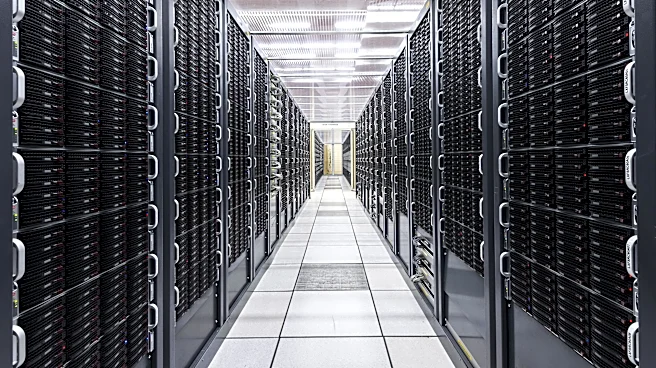
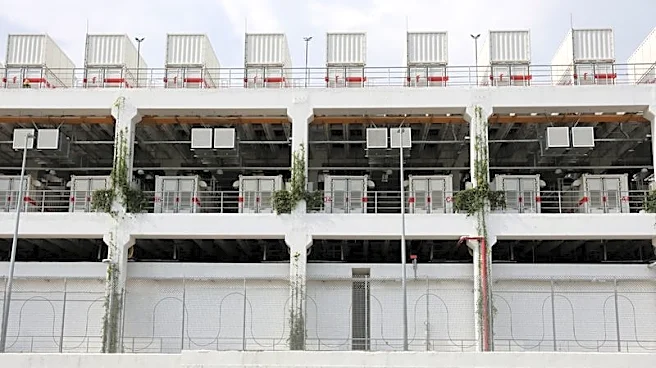
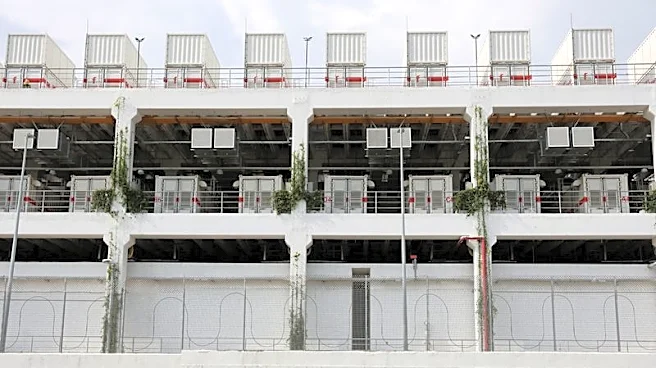
Digital Realty has launched an AI infrastructure testing lab at its SIN11 data center in Singapore. This new facility, known as the Digital Realty Innovation Lab (DRIL), is designed to allow enterprises to evaluate various hardware and cooling configurations
before deploying AI systems at scale. The lab provides a live data center environment for testing how computing, networking, and cooling technologies interact, supporting AI, high-performance computing, and hybrid cloud workloads. It features infrastructure capable of testing multi-vendor equipment configurations, including liquid-cooled racks with power densities of 150 kilowatts and above. The cooling infrastructure incorporates chilled-water cooling, containment systems, and liquid-to-liquid and liquid-to-air configurations to manage heat from high-density computing. This initiative follows Digital Realty's provisional allocation of 50 megawatts under Singapore's second Data Center Call for Application (DC-CFA2) to develop an AI-ready data center. The Singapore lab joins existing innovation labs in Northern Virginia, Tokyo, London, and São Paulo, with another planned for Johannesburg, South Africa, in 2027.
Why It's Important?
The opening of Digital Realty's AI infrastructure testing lab is significant because it directly addresses a major hurdle for enterprises looking to implement AI technologies. According to Digital Realty's 2026 Global Data Insights Survey, 40% of IT decision-makers identified a lack of specialized infrastructure as the primary constraint on their AI initiatives, a substantial increase from 9% in 2024. This figure rises to 50% among respondents in Singapore, highlighting a critical need for such testing environments. By providing a space to test complex AI infrastructure components from various vendors, Digital Realty enables businesses to de-risk their AI deployments, optimize performance, and ensure compatibility before making large-scale investments. This reduces potential failures and inefficiencies, accelerating the adoption of AI across industries. The lab's focus on high-density computing and advanced cooling solutions is crucial, as AI workloads generate significant heat and require specialized infrastructure that traditional data centers may not adequately support.
What's Next?
The Digital Realty Innovation Lab in Singapore is expected to become a key resource for enterprises in the Asia-Pacific region seeking to deploy AI solutions. Its presence will likely encourage more businesses to explore and adopt advanced AI technologies, as the barrier to entry related to infrastructure testing is lowered. Digital Realty plans to expand its innovation lab network with a new facility in Johannesburg, South Africa, by 2027, indicating a broader strategy to support AI infrastructure development globally. The company's continued investment in AI-ready data centers, such as the 50-megawatt facility planned for Jurong Island, Singapore, suggests a growing commitment to providing the foundational infrastructure necessary for AI at scale. Technology suppliers like HPE, Cisco, Schneider Electric, and others participating in the lab will continue to collaborate, potentially leading to further innovations in AI computing, networking, and cooling solutions.
Beyond the Headlines
This development underscores a broader trend in the data center industry: the increasing specialization required to support artificial intelligence. As AI models become more complex and data-intensive, the demands on computing power, network bandwidth, and cooling systems far exceed those of traditional IT workloads. The establishment of dedicated AI infrastructure testing labs reflects a recognition that off-the-shelf solutions are often insufficient, and a more integrated, pre-validated approach is necessary. This shift could lead to new industry standards for AI infrastructure, fostering greater collaboration between hardware manufacturers, software developers, and data center operators. Furthermore, by enabling efficient AI deployment, these labs could indirectly accelerate advancements in various sectors, from healthcare and finance to manufacturing and logistics, as companies gain the confidence and capability to leverage AI more effectively. The focus on sustainability and low-carbon data centers, as indicated by Singapore's DC-CFA2, also highlights the growing importance of energy efficiency in powering these high-demand AI environments.