





What's Happening?
Six months after its departure from OPEC, the United Arab Emirates (UAE) has announced an increase in its oil exports, despite the ongoing war involving Iran. This announcement was made at ADIPEC, one of the world's largest energy conferences, hosted
by the UAE. The UAE, a pivotal member of OPEC for 59 years, left the group in April, weeks after the U.S.-Israeli war with Iran began in late February. UAE energy minister Suhail al-Mazrouei stated that the country's exports have, at times, surpassed pre-war levels. OPEC figures, compiled from secondary sources, indicate that in September, the UAE pumped 3.917 million barrels per day of crude, a 15% increase from February. This figure is 470,000 bpd more than the OPEC+ quota that would have applied to the UAE in May had it remained a member.
Why It's Important?
The UAE's ability to increase oil exports independently of OPEC+ quotas has significant implications for global energy markets and the U.S. economy. With international oil prices at multi-year highs due to supply disruptions from the Iran war, increased output from a major producer like the UAE can help alleviate some pressure on global supply. For the U.S., this could potentially contribute to stabilizing fuel prices, which directly impact consumer costs and inflation. The UAE's strategic move to leave OPEC and boost production demonstrates a shift in its energy policy, prioritizing market share and meeting demand over collective production restraints. This could also influence other oil-producing nations to re-evaluate their participation in such alliances, potentially leading to a more fragmented global oil market.
What's Next?
The UAE plans to continue protecting its energy infrastructure and investing in new export routes, as stated by its energy minister. This suggests a sustained effort to maximize its oil production and export capabilities, further solidifying its independent role in the global oil market. Analysts suggest that being freed from OPEC production constraints has positioned the UAE favorably to meet demand, especially during periods of tight supply. The ongoing ADIPEC conference will likely feature further discussions on energy security, infrastructure development, and market dynamics, with the UAE showcasing its enhanced capacity. The long-term impact of the UAE's departure on OPEC's cohesion and influence will be closely watched, particularly as the alliance navigates complex decisions regarding 2027 production quotas.
Beyond the Headlines
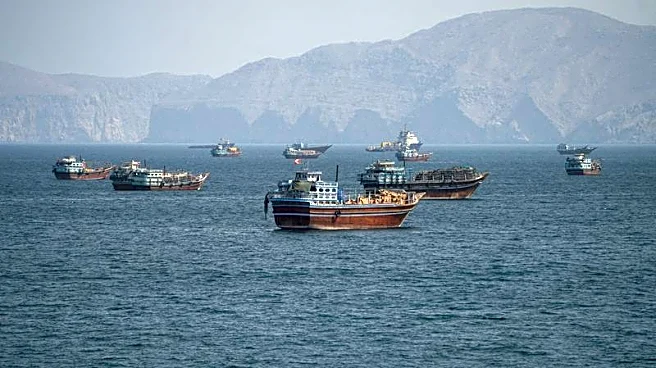
The UAE's decision to leave OPEC and subsequently increase exports highlights a broader trend of national interests potentially diverging from multilateral agreements in the face of geopolitical instability. This move could be seen as a strategic play to gain market share and influence, especially as other regional producers struggle with war-related disruptions. The ability of the UAE to rapidly expand ship-to-ship transfers to bypass the Strait of Hormuz demonstrates a proactive approach to mitigating supply chain vulnerabilities. This development also raises questions about the future effectiveness of OPEC+ in coordinating global oil supply, as individual nations may increasingly prioritize their own economic and security interests. The long-term implications could include a more competitive oil market, with less predictable supply adjustments and potentially greater price volatility.