



What's Happening?
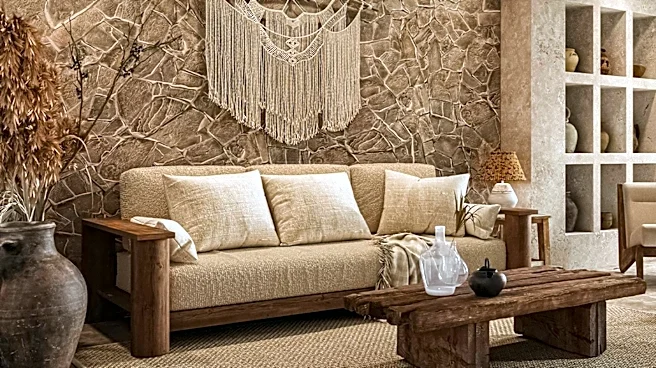
The rustic aesthetic is characterized by its emphasis on real wood, unique surfaces, and practical furniture that embraces imperfections. This design style aims to create a cozy, inviting, and lived-in atmosphere through elements like visible wood grain,
knots, aged hardware, and earthy color palettes. It blends traditional charm with modern functionality, as seen in contemporary rustic farmhouse nursery collections that offer conveniences like convertible cribs while maintaining an authentic, unpolished look. The style prioritizes natural textures and finishes, moving away from overly country-themed decor towards a more refined yet relaxed feel. This approach allows for a blend of old-world appeal with the demands of modern living, making it a versatile choice for various interior design applications.
Why It's Important?
The enduring popularity of the rustic aesthetic reflects a broader societal desire for authenticity, comfort, and a connection to nature in living spaces. In an increasingly digital and fast-paced world, this style offers a sense of grounding and warmth, appealing to consumers seeking a retreat from modern complexities. Its focus on durable, functional pieces with character also aligns with growing trends in sustainable consumption and appreciation for craftsmanship. For industries like furniture manufacturing, interior design, and hospitality, understanding and incorporating rustic elements can tap into a significant market segment that values timelessness and a homey feel. The aesthetic's adaptability, from nurseries to restaurant branding, demonstrates its wide appeal and potential for diverse applications, influencing consumer choices and design trends across various sectors.
What's Next?
The rustic aesthetic is likely to continue evolving, with designers finding new ways to integrate its core principles into contemporary settings. Future trends may see a further blending of rustic elements with other styles, such as minimalist or industrial, to create hybrid aesthetics that offer both warmth and modern sophistication. There could be an increased focus on reclaimed and sustainable materials within the rustic framework, driven by environmental consciousness. Additionally, as technology advances, there might be innovations in replicating natural textures and aged finishes more authentically and sustainably. The hospitality sector, particularly restaurants and boutique hotels, will likely continue to leverage the rustic aesthetic to create unique, inviting experiences that stand out in a competitive market, further solidifying its presence in design and consumer preferences.
Beyond the Headlines
Beyond its visual appeal, the rustic aesthetic taps into deeper psychological and cultural dimensions. It evokes a sense of nostalgia, simplicity, and a return to fundamental values, contrasting with the often sterile and impersonal nature of modern design. This style can foster a feeling of security and well-being, creating environments that encourage relaxation and connection. Ethically, the emphasis on natural materials and craftsmanship can promote more sustainable production practices and a greater appreciation for the origins of goods. Culturally, it reflects a longing for authenticity and a rejection of mass-produced uniformity, aligning with movements that celebrate individuality and heritage. The rustic aesthetic, therefore, is more than just a design choice; it's a reflection of broader societal values and aspirations for a more grounded and meaningful existence.