




What's Happening?
Dubai-based billionaire Hussain Sajwani has seen a significant return on his early investment in the artificial intelligence company Anthropic. Sajwani's initial $50 million investment in 2024, acquired through a court-supervised sale of shares from the FTX
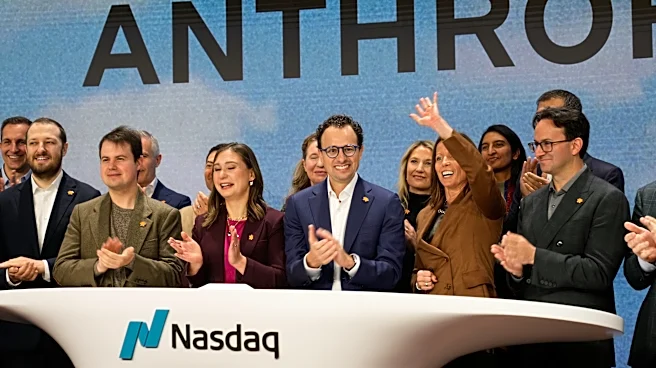
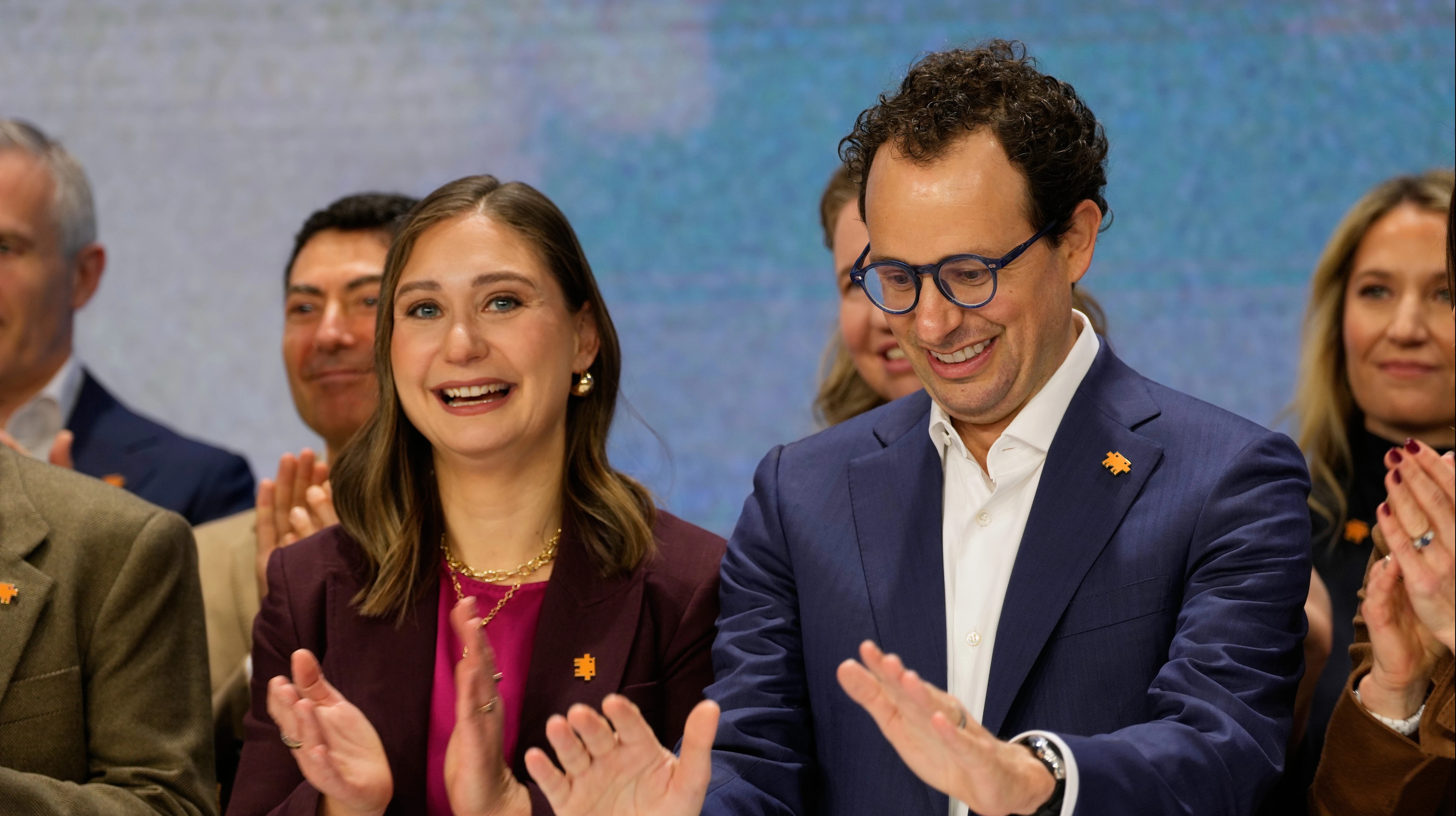
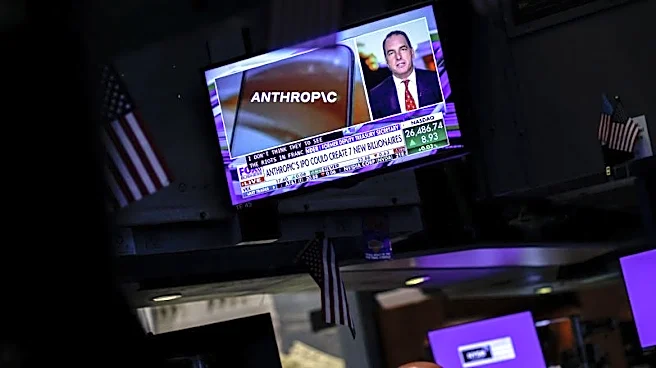
bankruptcy estate, has reportedly grown to a $1.4 billion paper profit in less than two years. This substantial gain follows Anthropic's recent Initial Public Offering (IPO), which priced shares at $83 each. The company's valuation has since skyrocketed to an estimated $1.5 trillion. Sajwani's success with Anthropic is part of his broader U.S. technology portfolio, which also includes investments in OpenAI, SpaceX, and Databricks. According to ForbesMiddleEast, the IPO boosted the wealth of Anthropic's CEO Dario Amodei and his six co-founders by $40 billion, and added $9 billion to the fortunes of three billionaires, including Sajwani, former Google CEO Eric Schmidt, and Skype co-founder Jaan Tallinn.
Why It's Important?
This event highlights the immense financial opportunities and rapid wealth creation possible within the U.S. artificial intelligence sector. Sajwani's $1.4 billion paper profit from a $50 million investment underscores the high-stakes, high-reward nature of early-stage technology investments, particularly in AI. The valuation of Anthropic at $1.5 trillion signifies the market's strong belief in the future growth and impact of AI technologies, positioning the U.S. at the forefront of this technological revolution. Such significant financial events can attract further foreign investment into U.S. tech companies, fueling innovation and job creation. For investors, it demonstrates the potential for exponential returns, while for the broader economy, it reflects the increasing integration and importance of AI in various industries. The involvement of high-profile investors like Eric Schmidt further validates the sector's potential.
What's Next?
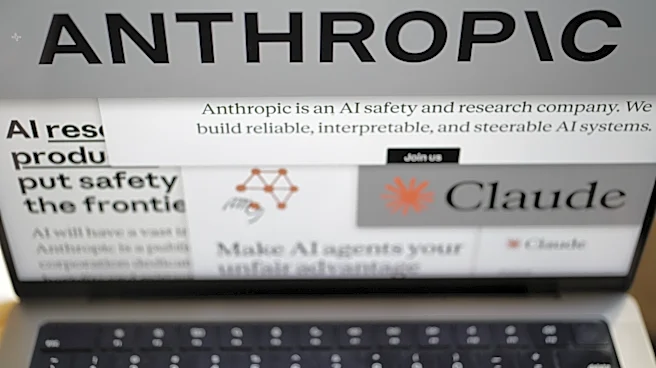
Following Anthropic's successful IPO and its soaring valuation, the company is likely to continue its expansion and development of AI technologies, such as its Claude chatbot. The substantial capital raised through the IPO and the increased investor confidence could enable Anthropic to accelerate research and development, potentially leading to new AI products and services. For Hussain Sajwani and other early investors, the focus will likely shift to managing their substantial paper profits, which could involve cashing out portions of their holdings or reinvesting in other promising ventures. The success of Anthropic's IPO may also encourage other AI startups to pursue public offerings, further energizing the U.S. technology market. The continued growth of AI companies will likely lead to increased competition and innovation within the sector, impacting various industries that seek to integrate AI solutions.
Beyond the Headlines
The rapid appreciation of Anthropic's value, leading to such significant gains for investors like Hussain Sajwani, raises broader questions about wealth concentration and the distribution of economic benefits from technological advancements. While AI promises transformative societal changes, the financial windfalls are currently concentrated among a relatively small group of founders and early investors. This phenomenon could exacerbate existing wealth disparities. Furthermore, the valuation of an AI company at $1.5 trillion, exceeding the annual GDP of several nations, prompts reflection on the speculative nature of the tech market and the potential for bubbles. The reliance on AI technologies, as suggested by the source, also brings ethical considerations regarding data privacy, algorithmic bias, and the future of work, which will become increasingly critical as these companies grow and their influence expands.