

What's Happening?
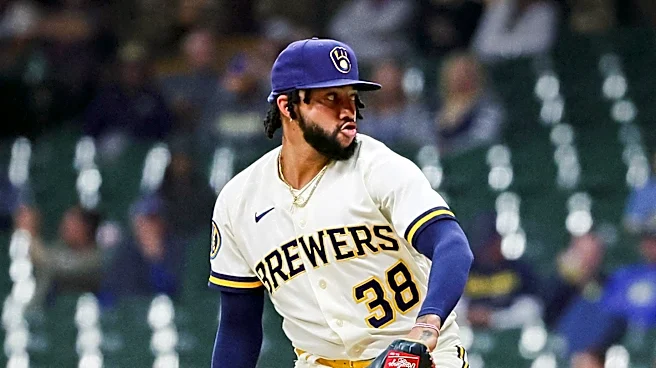
The Milwaukee Brewers are confronting significant changes to their pitching staff, particularly concerning right-handed relief depth, as they prepare for the upcoming season. Quinn Priester, a right-handed pitcher for the Brewers, missed the entire 2026
season due to thoracic outlet syndrome and underwent surgery in July. Priester is also listed among the 'Super 2s' eligible for salary arbitration, having accumulated 2 years and 134 days of service time. His absence, coupled with the departures of other key right-handers such as Brandon Woodruff, Antonio Senzatela, Dustin May, and Bryse Wilson, leaves the team with only nine right-handed pitchers on their 40-man roster. This situation necessitates a strategic offseason to rebuild their bullpen and starting rotation depth.
Why It's Important?
The Brewers' need to address their pitching depth is critical for their competitive outlook in the National League. Losing multiple experienced right-handed pitchers, including one who missed an entire season due to a significant injury, creates a substantial void. The team's ability to contend, especially as a small-market franchise, relies heavily on effective pitching. Failure to adequately replace these arms could severely impact their performance and playoff aspirations. The situation also highlights the financial implications of 'Super 2' arbitration eligibility, as players like Priester, despite injuries, become eligible for increased salaries, adding another layer of complexity to roster management and budget allocation for teams like the Brewers.
What's Next?
The Milwaukee Brewers are expected to actively seek new right-handed pitching talent during the offseason. This could involve exploring the free-agent market, which is noted to be strong on the pitching side, or pursuing trades. Potential strategies include re-signing former players like Senzatela, taking chances on high-upside free agents such as Jonathan Loáisiga, or identifying lesser-known pitchers who fit the organization's valuation criteria. The team's decisions in this area will be crucial in determining their competitiveness for the 2027 season, as they aim to rebuild a robust and reliable pitching staff.
Beyond the Headlines
The recurring issue of pitcher injuries, particularly severe ones like thoracic outlet syndrome, underscores a broader challenge in professional baseball regarding player health and workload management. For teams, such injuries not only impact immediate performance but also necessitate significant investment in player development and rehabilitation, alongside the financial commitments of arbitration. The 'Super 2' arbitration status for injured players like Priester also brings into focus the balance between player compensation rights and team financial flexibility, especially for smaller market teams that must carefully manage their payrolls to remain competitive.