

What's Happening?
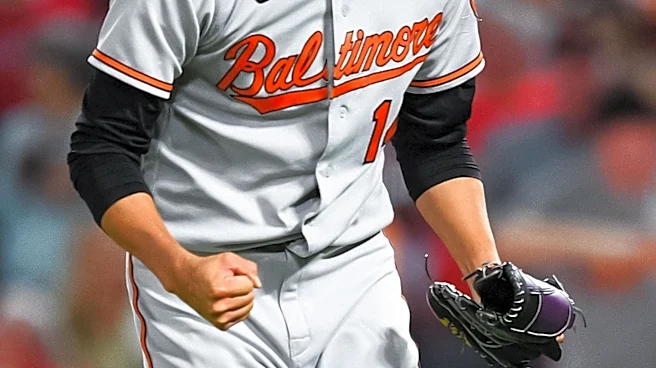
The Chicago Cubs are reportedly interested in acquiring left-handed pitcher Trevor Rogers, who had a healthy 2026 season with the Baltimore Orioles, posting a 4.03 ERA. Rogers also had an impressive 1.81 ERA in 18 starts during the 2025 season. However,
the Orioles have extended a qualifying offer to Rogers. If he declines this offer, which is widely anticipated, any team that signs him would be required to forfeit a draft pick and international bonus pool money. This condition presents a significant hurdle for the Cubs, as they typically avoid signing players with qualifying offers attached, with a notable exception being shortstop Dansby Swanson in December 2022. The team is prioritizing building its rotation but aims to limit acquisition costs, which could deter them from pursuing Rogers despite his potential.
Why It's Important?
This situation highlights a strategic challenge for the Chicago Cubs in balancing immediate roster needs with long-term asset management. The qualifying offer system in MLB is designed to compensate teams for losing high-value free agents, but it can also act as a deterrent for potential suitors. For the Cubs, giving up a draft pick and international bonus pool money for Rogers would mean sacrificing future talent development, which is a critical component of sustainable success in baseball. This decision could impact the team's competitiveness in the coming seasons, as draft picks and international bonus pools are vital for acquiring and developing young players. The outcome of their pursuit of Rogers will signal the Cubs' approach to team building and their willingness to invest heavily in established talent versus nurturing their farm system.
What's Next?
The Chicago Cubs will continue to evaluate their options for strengthening their pitching rotation throughout the offseason. While Trevor Rogers is a desirable target, the cost associated with his qualifying offer may lead the Cubs to explore other free agents or trade opportunities. The team's philosophy of limiting acquisition costs suggests they will carefully weigh the benefits of Rogers against the loss of future assets. This could involve targeting pitchers who do not have qualifying offers attached or engaging in trades that do not require sacrificing high-value draft capital. The decision regarding Rogers will likely influence subsequent moves the Cubs make to fill out their roster, as they seek to build the best possible pitching rotation without compromising their long-term organizational health.
Beyond the Headlines
The dilemma faced by the Cubs with Trevor Rogers is a microcosm of a broader trend in professional sports, where teams must constantly balance immediate competitive aspirations with the sustainability of their talent pipeline. The qualifying offer system, while intended to create a more equitable free agency market, often forces teams to make difficult choices that have ripple effects across their entire organization. For the Cubs, a franchise with a rich history and a passionate fan base, these decisions are scrutinized heavily. The long-term implications of sacrificing draft picks can be profound, potentially impacting the team's ability to develop homegrown stars and maintain a competitive edge for years to come. This strategic tension between winning now and building for the future is a constant challenge for front offices in modern sports.