




What's Happening?
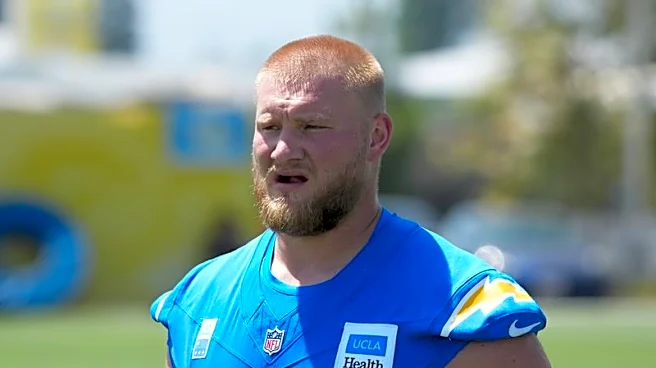
Ladd McConkey was selected as the 34th overall pick in the 2024 NFL Draft, joining the Los Angeles Chargers. This move positions him as a significant receiving option for quarterback Justin Herbert, particularly following the departure of key receivers
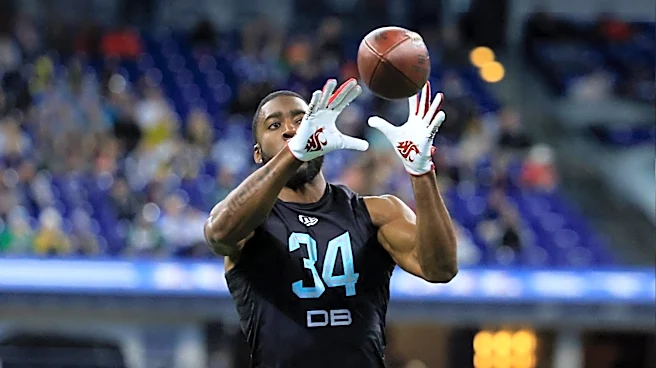
Keenan Allen and Mike Williams. In his collegiate career at Georgia, McConkey demonstrated efficiency, averaging at least 2.08 yards per route and 9.3 yards per target across three seasons. However, his volume of targets and routes was limited, peaking in 2022 with 82 targets over 15 games. His final college season was impacted by five missed games due to back and ankle injuries. McConkey addressed concerns about his athleticism by running a 4.39 40-yard dash at 6-0, 189 pounds, suggesting potential versatility for both perimeter and slot positions within the Chargers' offense. The Chargers' new offensive coordinator, Greg Roman, will integrate McConkey into an offense that also features returning starters Joshua Palmer and Quentin Johnston.
Why It's Important?
McConkey's arrival is crucial for the Los Angeles Chargers as they navigate a significant overhaul of their receiving corps. The team's decision to part ways with established wide receivers Keenan Allen and Mike Williams creates a void that McConkey is expected to help fill immediately. For Justin Herbert, a talented quarterback, having reliable targets is paramount for offensive success. The Chargers' current roster lacks major receiving threats at running back and tight end, which could lead to McConkey seeing a substantial increase in targets compared to his college career. This situation presents a significant opportunity for McConkey to establish himself as a primary receiver in the NFL. His efficiency metrics from college suggest he can make the most of his opportunities, and his athleticism indicates he can contribute in various roles. The success of this new receiving group, with McConkey as a central figure, will directly impact the Chargers' offensive production and their competitiveness in the upcoming season.
What's Next?
Ladd McConkey is currently recovering from a hamstring injury but anticipates being ready for training camp. His immediate focus will be to integrate into the Los Angeles Chargers' offense and build chemistry with quarterback Justin Herbert. The Chargers' coaching staff, under new offensive coordinator Greg Roman, will likely work to define McConkey's role, potentially utilizing his perimeter-slot flexibility. Given the team's lack of established receiving threats beyond Joshua Palmer and Quentin Johnston, McConkey is expected to compete for a high volume of targets. His performance in training camp and preseason games will be critical in determining his snap count and target share during the regular season. The development of the Chargers' new-look offense, with McConkey as a key component, will be closely watched as they aim to improve their overall offensive output and contend in the league.
Beyond the Headlines
The Chargers' strategic decision to draft Ladd McConkey and overhaul their receiving core reflects a broader trend in the NFL towards optimizing salary cap space and integrating younger, cost-controlled talent. By moving on from veteran receivers like Keenan Allen and Mike Williams, the team is signaling a commitment to building around Justin Herbert with a new generation of playmakers. This shift could lead to a more dynamic and unpredictable offense, but it also carries inherent risks associated with relying on unproven talent. The success of this strategy will not only depend on McConkey's individual performance but also on the collective development of the entire receiving group and the effectiveness of the new offensive scheme. This approach highlights the constant balancing act NFL teams face between veteran experience and the potential of emerging stars, with significant implications for team building and long-term competitiveness.