





What's Happening?
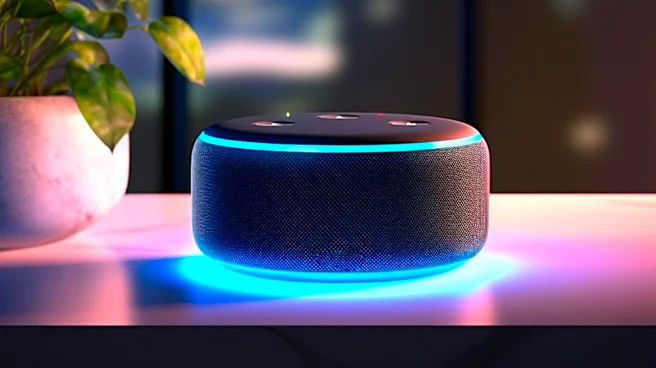
Amazon has launched Alexa+, an upgraded generative-AI version of its virtual assistant, integrated into the new Amazon Echo Dot (6th Gen, 2026). Alexa+ is designed to offer a more natural and contextual conversational experience, eliminating the need
for a wake word for continuous interaction. The Echo Dot (6th Gen) features a single 1.73-inch front-firing driver and a four-microphone array specifically optimized for Alexa+. Additionally, it includes an Omnisense sensor bundle and supports advanced connectivity options such as Wi-Fi 6E and Bluetooth 5.3. This device also functions as a smart home hub, compatible with Alexa, Matter, and Zigbee devices, aiming to streamline smart home management.
Why It's Important?
The introduction of Alexa+ signifies a significant advancement in conversational AI for smart home devices, potentially setting a new standard for user interaction with voice assistants. The ability to maintain context and engage in continuous conversation without repeated wake words could greatly enhance user convenience and device utility, making smart home technology more intuitive and accessible. For Amazon, this upgrade could solidify its position in the competitive smart home market, attracting new users and encouraging existing ones to upgrade. The integration of Wi-Fi 6E and a comprehensive smart home hub further positions the Echo Dot as a central component of modern connected living, potentially driving broader adoption of smart home ecosystems and associated services.
What's Next?
The rollout of Alexa+ in the Echo Dot (6th Gen, 2026) is expected to influence consumer expectations for voice assistant capabilities across the industry. Competitors will likely respond with their own enhanced AI features to keep pace with Amazon's advancements. Consumers can anticipate a more seamless and intelligent interaction with their smart home devices, potentially leading to increased reliance on voice commands for daily tasks. Developers may also begin to explore new applications and services that leverage Alexa+'s advanced conversational abilities, expanding the ecosystem of compatible smart home functionalities. The success of Alexa+ could dictate future trends in AI-driven consumer electronics.
Beyond the Headlines
The evolution of Alexa+ towards more natural and contextual conversations raises broader implications for human-computer interaction. As AI becomes more sophisticated in understanding and responding to human language, the line between human and artificial communication may blur, leading to discussions about the nature of companionship and assistance provided by AI. There are also potential ethical considerations regarding data privacy and the extent to which AI systems continuously process and interpret user conversations. The enhanced capabilities could also lead to a deeper integration of AI into daily routines, potentially altering how individuals manage their homes, access information, and interact with technology, fostering a more ambient and pervasive computing environment.