



What's Happening?
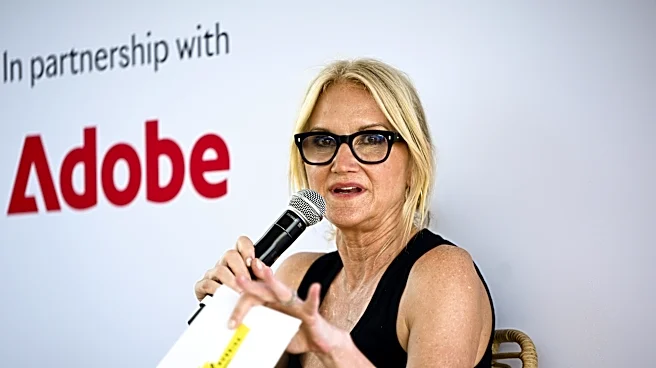
Mel Robbins, a 58-year-old personality known for her active lifestyle, has recently incorporated strength training into her fitness routine. This shift was influenced by advice from Dr. Stacy Sims and Dr. Vonda Wright, who emphasized the importance of
resistance training with heavier weights for individuals aged 40 and above. Robbins initially harbored concerns about 'bulking up' but overcame these myths to prioritize weightlifting. Her typical session begins with a warm-up including inchworms with push-ups, lunges with a twist, and banded overhead presses. The workout progresses to exercises like duck walks with resistance bands, reverse lunges with a medicine ball twist, chest presses, and snatches. Robbins meticulously plans her workouts in advance to ensure consistency and effectiveness.
Why It's Important?
The integration of strength training by a public figure like Mel Robbins highlights a growing awareness of its benefits, particularly for an aging population. This move underscores the importance of resistance training for maintaining muscle mass, bone density, and overall functional strength as individuals age. For women over 40, in particular, strength training can counteract age-related muscle loss and improve metabolic health, which is crucial for long-term well-being. Robbins's public endorsement could encourage more individuals to adopt similar fitness practices, potentially leading to improved public health outcomes and a reduction in age-related health issues. Her focus on longevity and vitality rather than aesthetic goals provides a relatable and motivating perspective for many.
What's Next?
As Mel Robbins continues to share her fitness journey, it is likely to inspire more discussions and initiatives around age-appropriate strength training. Fitness experts and healthcare professionals may see an increased interest in personalized training programs that cater to the needs of older adults. This trend could also lead to the development of more accessible and tailored fitness resources, including online content, gym programs, and educational materials. The emphasis on functional strength and long-term health, as promoted by Robbins, could become a more prominent narrative in the fitness industry, shifting focus from purely aesthetic goals to holistic well-being and active aging.
Beyond the Headlines
Mel Robbins's adoption of strength training at 58 challenges conventional notions about fitness and aging, particularly for women. Her initial apprehension about 'bulking up' reflects a common misconception that often deters women from weightlifting. By publicly addressing and overcoming this, she contributes to dismantling gendered fitness stereotypes. This development also highlights a broader cultural shift towards valuing strength and functional movement over thinness, promoting a more inclusive and empowering view of physical health. The emphasis on 'living a long, vibrant, healthy life' and maintaining independence through physical strength speaks to deeper societal desires for active aging and quality of life in later years, moving beyond superficial fitness goals.