

What's Happening?
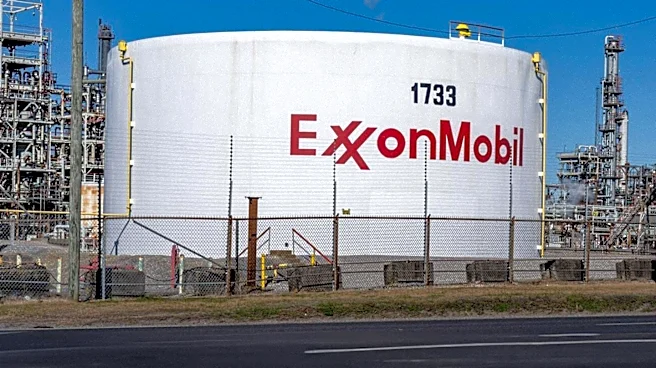
ExxonMobil and Petróleos de Venezuela (PDVSA) have signed a memorandum of understanding (MOU) to evaluate potential oil projects in Venezuela. This non-binding agreement signifies a preliminary assessment of future operations, though specific locations
for review have not yet been named, leaving the scope of potential activities uncertain. The signing ceremony, aired by Venezuela's state broadcaster VTV, saw Interim President Delcy Rodríguez welcoming ExxonMobil, indicating Venezuela's desire to attract major international oil companies back into its crude sector. ExxonMobil CEO Darren Woods has stated that the company requires legal safeguards for its investments, competitive returns, stable government policies, and clear regulations before committing to new projects. Woods acknowledged improvements in Venezuela's tax and legal environment. Rodríguez emphasized the need for legal certainty and favorable conditions for operations to benefit both the Venezuelan population and participating companies, expressing hope that the MOU would lead to concrete agreements. This move marks a step towards mending ties after ExxonMobil's departure almost 20 years ago.
Why It's Important?
This MOU between ExxonMobil and PDVSA is a significant development for the U.S. energy sector and global oil markets. Venezuela possesses vast oil reserves, and the potential return of a major U.S. player like ExxonMobil could substantially impact global supply and pricing. For ExxonMobil, re-entering Venezuela offers access to significant crude resources, potentially boosting its production portfolio. However, the company's demand for legal safeguards, stable policies, and clear regulations highlights the inherent risks and complexities of operating in Venezuela's historically volatile political and economic environment. The Venezuelan government's efforts to attract foreign investment signal a strategic shift aimed at revitalizing its struggling oil industry and economy. Success in establishing a secure investment climate could encourage other international companies to follow suit, leading to increased oil output and potentially influencing U.S. energy independence and import strategies. Conversely, failure to meet ExxonMobil's conditions could deter future investments, prolonging Venezuela's economic challenges and limiting its contribution to global oil supply.
What's Next?
The immediate next steps involve ExxonMobil and PDVSA conducting detailed evaluations of potential oil projects in Venezuela. Before any operational activities can commence, formal joint venture or production-sharing contracts will need to be settled. ExxonMobil will continue to assess the investment conditions, focusing on the establishment of robust legal safeguards, the prospect of competitive returns, and the stability of government policies and regulations. The Venezuelan government, led by Interim President Delcy Rodríguez, will likely work to demonstrate its commitment to creating a favorable and secure environment for foreign investors. The success of these preliminary assessments and subsequent negotiations will determine whether ExxonMobil makes a full commitment to new exploration or production in Venezuela. This process will be closely watched by other international oil companies considering re-entry into the Venezuelan market, as it could set a precedent for future foreign investment in the country's energy sector.
Beyond the Headlines
The potential re-engagement of ExxonMobil in Venezuela's oil sector carries broader implications beyond immediate economic gains. It highlights the complex interplay between geopolitical interests, energy security, and corporate responsibility. The demand for legal safeguards by ExxonMobil underscores the persistent challenges of operating in countries with a history of political instability and nationalization, raising questions about the long-term enforceability of contracts and property rights. From an ethical standpoint, renewed investment in Venezuela's oil industry, while potentially beneficial for the country's economy, also raises concerns about environmental impact and the global transition away from fossil fuels. The move could be seen as prioritizing energy supply over climate goals, especially given the environmental and health risks associated with oil extraction and processing. Furthermore, the re-establishment of ties with a major U.S. corporation could signal a shift in Venezuela's international relations, potentially influencing its political trajectory and its standing in the global community. The balance between economic recovery, environmental stewardship, and political stability will be a critical challenge for both Venezuela and its international partners.