








What's Happening?
Elijah Sol, a 6-year-old boy diagnosed with cerebral palsy, is utilizing his Halloween costume as a unique educational tool to raise awareness about his condition. Hunter Sowards reported on this initiative, highlighting Elijah's creative approach to teaching
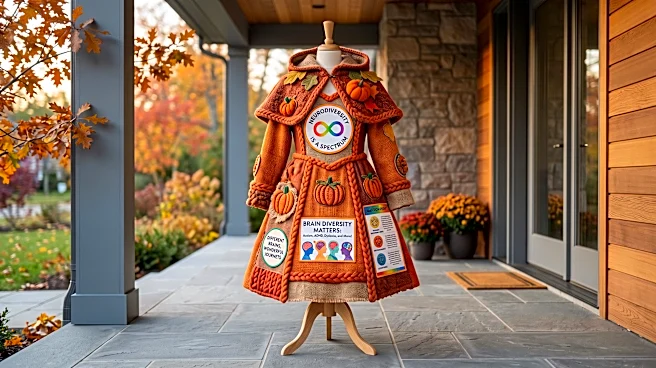
others about cerebral palsy. The specific details of the costume and how it conveys information about his condition are not provided in the source, but the core message is about using a festive occasion to foster understanding and empathy. This effort aims to demystify cerebral palsy for other children and the wider community, promoting inclusivity and knowledge about neurological conditions.
Why It's Important?
This initiative is important because it addresses a critical need for education and awareness regarding disabilities, particularly among children. By using a Halloween costume, Elijah Sol is engaging his peers in a relatable and non-intimidating way, which can significantly impact how they perceive and interact with individuals with disabilities. Early exposure to such educational efforts can foster empathy, reduce stigma, and promote a more inclusive society. For children with cerebral palsy and other conditions, seeing their experiences acknowledged and understood can be empowering. This approach also highlights the potential of creative and personal storytelling to bridge gaps in understanding, moving beyond clinical definitions to humanize the experience of living with a disability. It encourages a shift from pity to understanding and acceptance, which is vital for the social and emotional well-being of disabled individuals.
What's Next?
The impact of Elijah's initiative could inspire other individuals and families to find creative ways to educate their communities about various conditions. This could lead to more personalized and engaging awareness campaigns, especially within school settings and local communities. The success of such an approach might encourage disability advocacy groups and educational institutions to develop similar programs that leverage everyday events and personal narratives for educational purposes. Furthermore, it could prompt discussions among parents and educators about how to better integrate disability awareness into children's learning experiences, moving beyond traditional methods. The story serves as a powerful example of how individual actions, even from a young child, can spark broader conversations and contribute to a more informed and compassionate society.
Beyond the Headlines
Beyond the immediate educational aspect, Elijah's use of a Halloween costume to teach about cerebral palsy touches upon deeper societal themes of representation and normalization. It challenges the often-invisible nature of disabilities in mainstream culture by bringing it into a public, celebratory space. This act can help normalize conversations around disability, making it less of a taboo subject and more of a natural part of human diversity. It also underscores the agency of individuals with disabilities, even young children, in shaping their own narratives and advocating for understanding. This personal approach can be far more effective than abstract campaigns, as it creates a direct, emotional connection with the audience. The long-term implication is a gradual shift in societal attitudes, where disability is viewed not as a deficit, but as a characteristic that contributes to the rich tapestry of human experience, fostering a culture of genuine inclusion and respect.