
What's Happening?
H&M Group, Inditex, Bestseller, and Adidas have formed the Apparel Recovery Coalition (ARC) to address the global issue of textile waste, particularly in countries that receive large volumes of exported
secondhand apparel. This initiative, launched in collaboration with The Or Foundation, aims to explore how Extended Producer Responsibility (EPR) fees and other accountability mechanisms for brands can support circular fashion ecosystems worldwide. The coalition will focus on reuse, upcycling, recycling, and responsible waste management. Ghana will serve as the initial testbed for this blueprint, with plans to apply the model to at least one other country within two years. The activities of ARC will be funded by voluntary contributions from the founding brands. The Or Foundation has been advocating for 'globally accountable EPR' for five years, highlighting that current EPR policies often do not allow fees to flow across borders, despite the cross-border movement of used textiles. The goal is to create a framework where producer responsibility contributions follow textiles to their end-of-life, regardless of location.
Why It's Important?
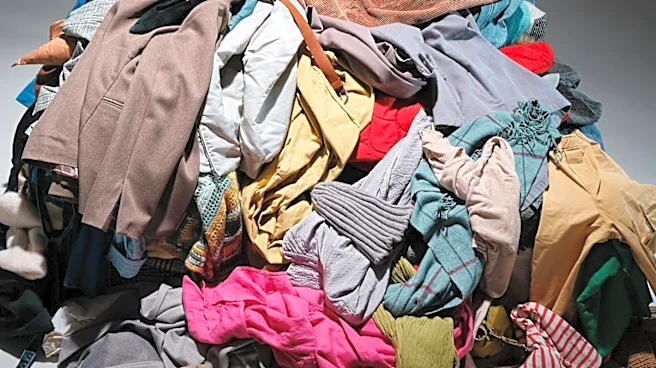
This coalition represents a significant step towards addressing the environmental and social impact of textile waste, particularly in developing countries. The current system often leaves countries like Ghana burdened with mountains of discarded clothing, much of which is unusable and contributes to pollution. By exploring 'globally accountable EPR,' ARC aims to shift the financial responsibility for waste management back to the brands that produce the clothing. This could lead to more sustainable practices throughout the fashion supply chain, encouraging brands to design more durable and recyclable garments. The pilot program in Ghana, focusing on leveraging and expanding existing circular fashion ecosystems like the Kantamanto Market, demonstrates a commitment to practical, on-the-ground solutions. If successful, this blueprint could influence future EPR policies in the EU and other regions, creating a more equitable and sustainable global textile economy. It also highlights the growing pressure on fashion brands to take greater responsibility for their products' entire lifecycle.
What's Next?
The Apparel Recovery Coalition will begin its pilot program in Ghana, focusing on developing a blueprint for globally accountable EPR. This will involve channeling voluntary funds from the participating brands into initiatives that support reuse, upcycling, and responsible waste management within Ghana's existing circular fashion ecosystem. The coalition plans to apply this blueprint to at least one additional country within the next two years. The long-term goal is for other brands to join ARC and for the developed blueprint to be integrated into EPR policies across the EU and potentially other regions. This would ensure that producer responsibility contributions follow textiles across borders, providing sustained funding for waste management and circularity initiatives in recipient countries. The success of this pilot will be crucial in demonstrating the feasibility and effectiveness of cross-border EPR mechanisms, potentially leading to widespread adoption and a more sustainable future for the global fashion industry.
Beyond the Headlines
This initiative delves into the complex ethical and economic dimensions of global textile trade and waste management. The concept of 'globally accountable EPR' challenges the current model where the environmental burden of fast fashion is disproportionately borne by countries in the Global South. It highlights the need for international cooperation and policy reform to address the externalities of consumption in developed nations. The focus on leveraging existing circular economies, such as Ghana's Kantamanto Market, is crucial, as it recognizes and supports local solutions rather than imposing external ones. This approach could empower local communities and foster economic development through sustainable practices. However, the voluntary nature of the initial funding raises questions about the long-term commitment and scalability of such initiatives without robust regulatory frameworks. The coalition's efforts could set a precedent for corporate responsibility in other industries facing similar global waste challenges, pushing for a more holistic and equitable approach to product lifecycle management.