










What's Happening?
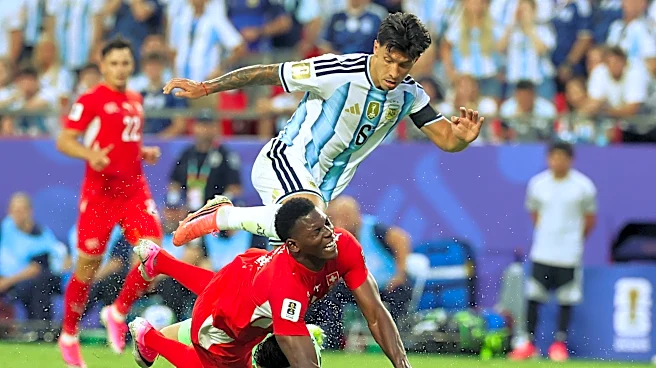
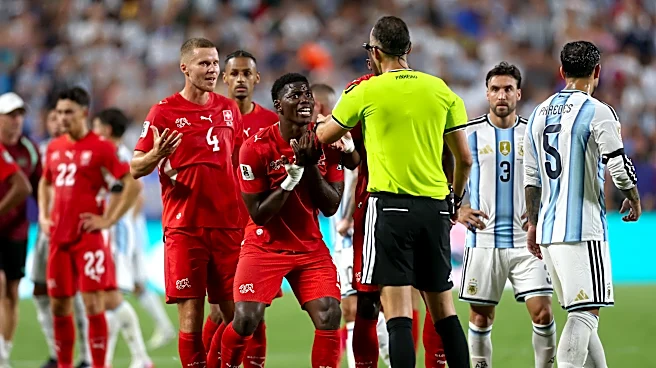
In a dramatic turn of events during the World Cup quarterfinals, Switzerland's striker Breel Embolo was sent off after receiving a second yellow card for simulation against Argentina. The incident unfolded in the 72nd minute when Embolo appeared to be
fouled by Argentina's Leandro Paredes. Initially, the referee, Joao Pedro Silva Pinheiro, issued a yellow card to Paredes. However, a VAR review overturned this decision, determining that Embolo had simulated the contact. Consequently, the yellow card was rescinded from Paredes and given to Embolo, who had already been booked in the first half, resulting in a red card. This decision left Switzerland to play the remainder of the match with ten men against the defending champions.
Why It's Important?
The decision to send off Embolo has significant implications for Switzerland's performance in the World Cup, as playing with one less player against a formidable team like Argentina poses a substantial challenge. The use of VAR in this context highlights the ongoing debate about its role in football, particularly concerning subjective decisions like simulation. The incident also underscores the potential for VAR to influence the outcome of high-stakes matches, raising questions about the consistency and fairness of its application. For Switzerland, the red card could impact their strategy and morale, potentially affecting their chances of advancing further in the tournament.
What's Next?
Switzerland will need to adjust their tactics to cope with being a player down for the remainder of the match. The team's ability to adapt quickly will be crucial in maintaining their competitiveness against Argentina. Additionally, this incident may prompt further discussions among football governing bodies about the criteria for issuing yellow cards for simulation and the role of VAR in such decisions. The outcome of this match could also influence future refereeing guidelines and the training of officials in handling similar situations.