


What's Happening?
Tesla has begun rolling out its latest semi-autonomous driving software, FSD (Supervised) v15, to select customers on November 21. This update, the first major consumer release in over a year, introduces a new feature called Tesla Reality View. This system
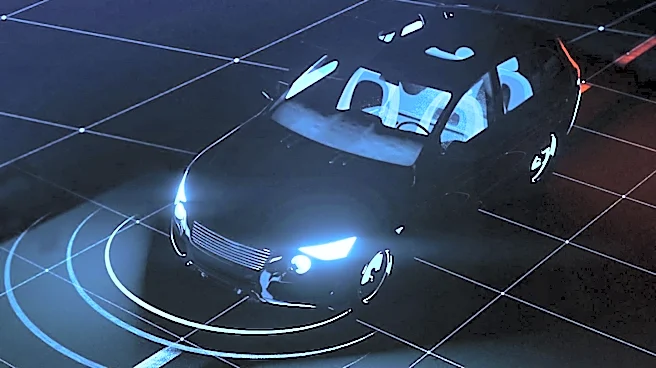
generates real-time AI video of the road, displaying surrounding traffic, crosswalks, buildings, and navigational arrows directly on the car's screen. CEO Elon Musk described the experience as similar to a video game, noting that the AI video generation uses only half of one AI4 TRIP accelerator. Ashok Elluswamy, Tesla's VP of AI software, stated that this new visual feed helps communicate the car's driving intent. Beyond the visual enhancements, Tesla claims the update significantly improves navigation, parking, pothole avoidance, and the detection of animals and road debris. The company also asserts a 25x improvement in 'safety critical cases,' though specific metrics and supporting data for this claim have not been released. FSD remains a supervised driver-assistance system, requiring drivers to maintain attention and be ready to intervene.
Why It's Important?
This FSD (Supervised) v15 update is significant for the automotive industry and the future of autonomous driving technology. By integrating real-time AI video generation, Tesla is pushing the boundaries of how drivers interact with and understand their vehicle's autonomous functions. The enhanced visualization could increase driver confidence and trust in the system by providing a clearer, more intuitive representation of the car's perception and planned actions. This development could also set a new standard for user interfaces in semi-autonomous vehicles, potentially influencing other manufacturers to adopt similar advanced visual feedback systems. Furthermore, the claimed improvements in safety-critical scenarios, if substantiated, could contribute to a reduction in accidents and enhance overall road safety. However, the continued requirement for driver supervision underscores the ongoing challenges and regulatory hurdles in achieving fully autonomous driving, highlighting the critical balance between technological advancement and human oversight in vehicle operation.
What's Next?
Following the initial limited rollout, Tesla is expected to expand access to FSD (Supervised) v15 to a broader customer base. The company will likely continue to gather data and feedback from users to refine the system further, potentially leading to subsequent updates that address any identified issues or introduce additional features. The claims of improved safety and performance will be subject to scrutiny from regulators, safety organizations, and the public, who will be looking for more detailed data to support these assertions. The development also sets the stage for increased competition in the autonomous driving sector, as other automotive manufacturers and technology companies will likely respond with their own advancements in driver-assistance systems and in-car visualization. Future iterations of FSD may aim to further reduce the need for driver intervention, moving closer to fully autonomous capabilities, while still navigating the complex landscape of safety regulations and public acceptance.
Beyond the Headlines
The introduction of real-time AI video generation in Tesla's FSD system raises deeper questions about the evolving relationship between humans and artificial intelligence in critical applications like driving. The 'gamified' interface, while potentially engaging, could also influence driver perception of risk and responsibility, blurring the lines between human control and AI autonomy. There are ethical considerations regarding the transparency of AI decision-making, as the system 'communicates the intent of the car' through visualizations, but the underlying algorithms remain complex. Legally, the continued classification of FSD as a supervised system means drivers bear ultimate responsibility, but as the technology becomes more sophisticated, the allocation of liability in the event of an incident could become increasingly contentious. Culturally, this advancement contributes to the broader societal integration of AI, pushing us to reconsider how we interact with intelligent machines and the level of trust we place in them for tasks that directly impact safety and well-being.