





What's Happening?
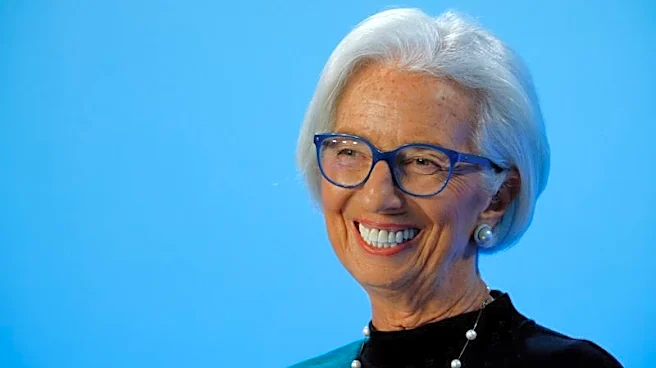
European Central Bank (ECB) President Christine Lagarde has indicated that inflation in the Eurozone is expected to remain elevated in the coming quarters. In an interview with the Japanese newspaper Yomiuri Shimbun, Lagarde stated that significant changes
would be required to deter policymakers from raising interest rates again in December. This follows the ECB's decision in late October to maintain its benchmark deposit rate at 2.50%. Headline inflation across the 21-member currency bloc is currently double the central bank's 2% target, largely driven by increases in global crude and European natural gas prices, exacerbated by the Middle East conflict. While core inflation remained at 2.5% in October, Lagarde noted that policymakers would thoroughly examine granular components before deciding on a potential 25-basis-point hike next month, which would be the third rate increase in the current cycle. She also mentioned that wage metrics have not yet shown an alarming upward spiral, suggesting that secondary inflation pass-through has developed within the central bank's projections.
Why It's Important?
The ECB's stance on inflation and potential interest rate hikes has significant implications for global financial markets, including those in the U.S. While the direct impact is on the Eurozone, a continued hawkish approach by the ECB could influence the Federal Reserve's decisions and global economic sentiment. Higher interest rates in Europe could strengthen the Euro against the U.S. dollar, affecting trade balances and the competitiveness of U.S. exports. Furthermore, if European inflation remains persistent, it could signal broader global inflationary pressures, potentially impacting commodity prices and supply chains that affect U.S. businesses and consumers. The challenge for policymakers, as highlighted by Lagarde, is balancing the need to curb inflation with the risk of derailing economic momentum. An additional rate hike could push borrowing costs to a level that actively restricts economic growth in the Eurozone, which could have ripple effects on global demand and investment, including for U.S. companies operating internationally.
What's Next?
The ECB's Governing Council will scrutinize various economic indicators, particularly granular components of inflation and wage metrics, before its December meeting. A 25-basis-point rate hike is a possibility, which would mark the third increase in the current cycle. This decision will be crucial in determining the trajectory of monetary policy in the Eurozone and could influence global financial markets. The ongoing surge in sovereign bond yields worldwide, driven by corporate debt issuance and heightened sovereign risk premiums, will also be a key factor for policymakers. The ECB will continue to monitor forward-looking indicators such as multi-year wage agreements and companies' wage expectations to assess the potential for further inflationary pressures. The outcome of these deliberations will shape the economic outlook for the Eurozone and could have indirect implications for U.S. economic policy and market stability.
Beyond the Headlines
The ECB's dilemma reflects a broader global challenge faced by central banks: how to effectively combat persistent inflation without triggering a significant economic downturn. The emphasis on 'granular components' and 'secondary inflation pass-through' highlights the complexity of current inflationary dynamics, which are influenced by a mix of supply-side shocks (like energy prices) and demand-side factors. The potential for a 'growth dilemma' underscores the tightrope walk central banks are performing, where aggressive tightening could stifle economic activity. This situation also brings to light the interconnectedness of global economies; while the ECB's mandate is specific to the Eurozone, its actions inevitably have spillover effects on other major economies, including the U.S., through trade, capital flows, and investor sentiment. The long-term implications could include a re-evaluation of global supply chain resilience and the role of energy security in macroeconomic stability.