

What's Happening?
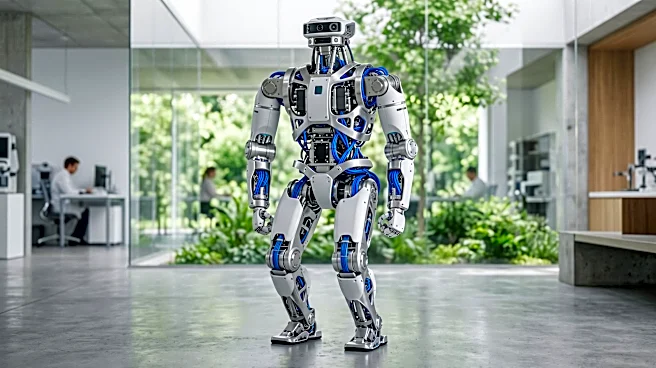
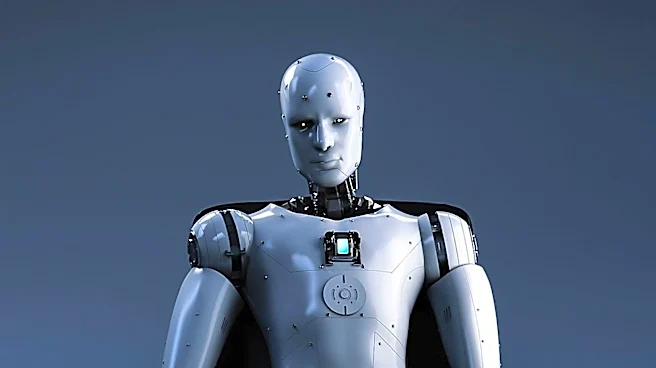
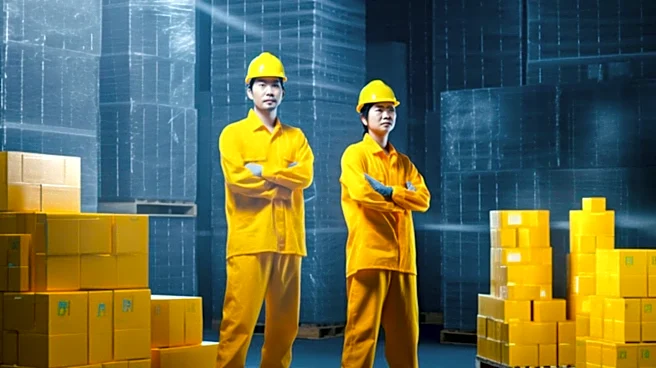
Swiss robotics company Embodied AI has introduced AIR, a new humanoid robot designed to work alongside humans on factory floors. Unveiled at Humanoid Europe 2026, AIR aims to tackle the projected shortage of 1.9 million U.S. manufacturing jobs by 2033,
according to Deloitte and the Manufacturing Institute. The robot is specifically engineered to handle repetitive manual tasks that frequently change, allowing human workers to focus on more skilled work. Embodied AI developed AIR from research to an industrial prototype in nine months and has already secured contracts with major global original equipment manufacturers (OEMs). The company is currently testing AIR with international manufacturers and is planning for scaled production. AIR's design prioritizes safety, featuring a tendon-driven architecture with lightweight arms and a wheeled base for stability on factory floors. It learns tasks through human operator demonstrations, typically becoming autonomous within a month, with operators remaining on hand for unforeseen situations.
Why It's Important?
The introduction of AIR is significant for the U.S. manufacturing sector, which faces a substantial labor gap. By automating repetitive tasks, AIR can help maintain production levels and potentially reduce operational costs, thereby enhancing the competitiveness of U.S. industries. This technology is not intended to replace human workers but rather to augment their capabilities, allowing them to engage in more complex and value-added activities. This shift could lead to an upskilling of the manufacturing workforce and improve overall factory efficiency. The rapid development and deployment of AIR also highlight the accelerating pace of innovation in robotics and artificial intelligence, which could transform industrial practices across the nation. Furthermore, the focus on safety and human-robot collaboration is crucial for successful integration into existing work environments, fostering a more harmonious and productive factory floor.
What's Next?
Embodied AI is currently testing AIR with global manufacturers and is preparing for scaled production, indicating a potential widespread adoption in the near future. The company plans for AIR to receive CE marking in 2027, which will facilitate its market entry and deployment in various industrial settings. As AIR learns tasks from human operators, the accumulated knowledge from one robot can be transferred to others, suggesting a scalable and efficient learning process for new deployments. The growing market appetite for physical AI, with 22% of manufacturers planning to use humanoid robots within two years, suggests a strong demand for solutions like AIR. Future developments will likely focus on refining AIR's learning capabilities, expanding its range of dexterous tasks, and ensuring seamless integration into diverse manufacturing environments.
Beyond the Headlines
The deployment of humanoid robots like AIR raises deeper questions about the future of work and the evolving relationship between humans and machines. While the immediate goal is to address labor shortages and improve efficiency, the long-term implications include a potential redefinition of job roles, the need for new training programs for human workers, and ethical considerations regarding automation. The emphasis on robots performing 'repetitive manual tasks that change too often for conventional robots' suggests a move towards more adaptable automation, which could make manufacturing more resilient to market fluctuations. This also highlights the increasing sophistication of AI models in physical applications, where safety and reliability are paramount, as emphasized by Francesco Stella, co-founder and CEO of Embodied AI. The success of AIR could pave the way for similar technologies in other sectors facing labor challenges, driving a broader societal conversation about technological integration and human potential.