




What's Happening?
Several beginner-friendly berry bushes are being highlighted for their ease of care and dual benefits of producing edible fruit while enhancing garden aesthetics. These low-maintenance selections make fruit production accessible even for novice gardeners.
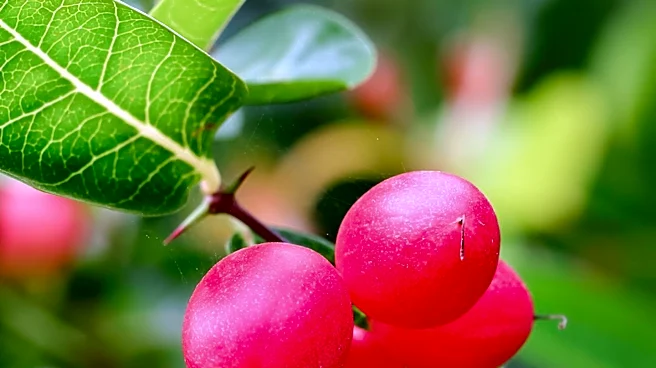
Examples include Prime-Ark® 'Freedom' Thornless Blackberry, which offers two harvests of large, sweet berries on self-supporting, thornless canes, and Rabbiteye Blueberry, known for its bell-like white spring blooms and radiant red fall foliage. Other recommended varieties include 'Regent' Serviceberry, American Elderberry, Raspberry Shortcake® Dwarf Raspberry, and Candybox® Chilean Guava. These plants provide pollinator-friendly blooms, colorful fall foliage, and a steady supply of berries, making them attractive additions to any garden or landscape.
Why It's Important?
The promotion of beginner-friendly berry bushes is significant for U.S. homeowners and gardeners. It democratizes fruit cultivation, allowing more individuals to grow their own food, which can lead to increased food security and healthier eating habits. The low-maintenance aspect reduces barriers to entry for gardening, encouraging wider participation. Furthermore, these plants contribute to local ecosystems by attracting pollinators like butterflies and hummingbirds, and providing food for songbirds, thereby supporting local wildlife. Their aesthetic value means they can be integrated into existing landscaping, offering a practical and beautiful alternative to purely ornamental plants. This trend supports sustainable living and enhances the ecological value of residential areas.
What's Next?
As interest in home gardening and sustainable living continues to grow, the demand for easy-to-grow edible plants like these berry bushes is expected to rise. Nurseries and garden centers will likely expand their inventory of such varieties, making them more widely available to consumers across different USDA Hardiness Zones. Educational resources, including online guides and local gardening workshops, will continue to inform gardeners about optimal planting and care practices, including crucial details like chilling hour requirements. This focus on accessible fruit production could lead to more diverse and productive home gardens, contributing to a broader movement towards localized food systems and enhanced ecological landscapes in urban and suburban environments.
Beyond the Headlines
The emphasis on beginner-friendly berry bushes reflects a broader cultural shift towards self-sufficiency and a desire for a closer connection to nature. It highlights a growing appreciation for plants that serve multiple purposes, moving beyond purely decorative landscaping to embrace functionality and ecological benefit. This trend can foster a sense of accomplishment and well-being among gardeners, as they witness the direct results of their efforts in the form of fresh produce. Moreover, by encouraging the planting of pollinator-friendly species, it subtly educates the public about the importance of biodiversity and the role of individual actions in supporting environmental health. It represents a practical step towards creating more resilient and sustainable communities.