







What's Happening?
The field of photonics, which involves converting electrical signals into optical signals and back using laser technology, is becoming increasingly practical and is poised to drive the next significant advancements in semiconductor technology. This shift
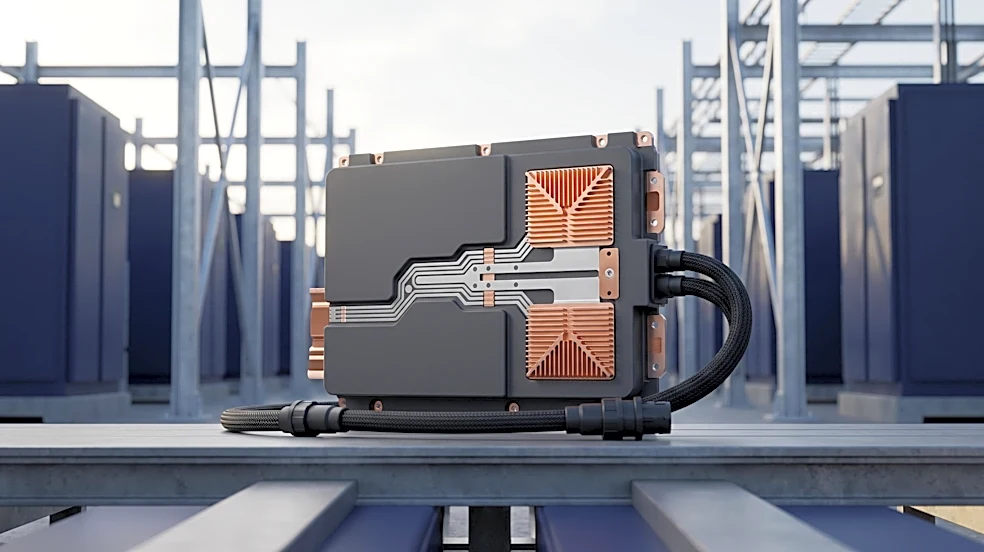
is crucial as traditional electrical interconnects in data centers are reaching their limits in terms of power and signal integrity, struggling to keep pace with the 30-40% annual growth in bandwidth demand driven by AI training and distributed systems. The adoption of optical interconnects, co-packaged optics, and photonic switching is collapsing the distinction between computing and communications hardware. Compound semiconductors, such as indium phosphide, are key to generating these optical signals, enabling faster and more energy-efficient signal transmission. This move towards physics-based solutions is also evident in addressing power and cooling constraints in compute infrastructure, pushing the development of advanced thermal materials, new substrates, and cryogenic system designs.
Why It's Important?
This technological evolution is critical for the U.S. economy and national competitiveness, particularly in the semiconductor industry and advanced manufacturing. As transistor scaling slows, the economic frontier is moving towards the physics of fabrication, making next-generation lithography, metrology, and inspection vital strategic priorities. The U.S. stands to gain significantly by investing in and fostering these physics-driven technologies, ensuring its leadership in critical areas like AI and high-performance computing. Companies and research institutions involved in photonics, advanced materials, and quantum technologies will see increased demand and investment. Conversely, those reliant solely on traditional silicon-based electronics may face challenges in keeping up with the performance and energy efficiency demands of future computing. The emphasis on physical solutions also addresses the growing energy consumption of data centers, which are projected to more than double their electricity use this decade, making energy-efficient optical interconnects a necessity.
What's Next?
The trajectory suggests continued investment and research into physics-based solutions for computing and networking. This includes further development in quantum computing, analog and neuromorphic architectures, and superconducting electronics to overcome current physical limits. The integration of optical interconnects and photonic switching will become more widespread in data centers and high-performance computing environments. Expect increased collaboration between government initiatives, such as DARPA and national quantum programs, and private venture capital firms specializing in physics tech to accelerate the commercialization of these innovations. The focus will also be on building robust supply chains and establishing industry standards for these emerging technologies. Furthermore, the demand for skilled professionals in physics, materials science, and optical engineering will likely surge, driving educational and workforce development initiatives to support this technological shift.
Beyond the Headlines
The shift towards physics-driven solutions in computing and networking represents a fundamental re-evaluation of how technology scales. It highlights that the most valuable problems are no longer abstract software challenges but physical limitations that require deep scientific understanding and novel engineering. This paradigm shift has profound implications for innovation, moving beyond incremental software efficiencies to entirely new physical computing substrates. It also underscores the interconnectedness of various scientific disciplines, where breakthroughs in physics directly translate into advancements in computing, energy, and security. The long-term impact could include a redefinition of what is computationally possible, leading to new forms of artificial intelligence, more secure communication networks, and significantly more energy-efficient data centers. This emphasis on 'physics tech' suggests a future where scientific discovery and technological application are more tightly integrated, fostering an ecosystem where fundamental research is rapidly translated into practical, world-changing products.