






What's Happening?
JPMorgan CEO Jamie Dimon is championing a management philosophy that emphasizes small, agile teams, likening them to 'Navy SEALs or the Army's Delta Force.' This approach aims to enable the large financial institution, with its 320,000 employees, to operate
with greater nimbleness and responsiveness in highly specialized areas. Keith Canton, who leads a 60-person unit advising clients on private financing, exemplifies this model, focusing on selectivity in hiring to ensure expertise. Similarly, Warfield Price co-leads a 25-person strategic financing group, established in July of the previous year, which prioritizes solving unconventional client problems with customized solutions and a non-hierarchical structure. Matt Tartaglia, global head of director advisory services, also leads a sub-20-person team, emphasizing continuous communication and quick adaptation to client needs. These teams are designed to break through bureaucracy and make the sprawling bank feel more approachable to clients by providing bespoke services and fostering direct relationships.
Why It's Important?
This strategic shift by JPMorgan, a major U.S. financial institution, has significant implications for the banking industry and corporate organizational structures. By adopting a 'Navy SEAL' team model, JPMorgan aims to enhance its competitive edge in specialized financial services, potentially setting a precedent for other large corporations struggling with bureaucracy and slow decision-making. The emphasis on small, expert-driven teams can lead to more innovative solutions, faster client response times, and a more personalized client experience, which are critical differentiators in a competitive market. This approach could also influence talent acquisition and retention strategies across the sector, as it prioritizes specialized skills and team cohesion over sheer headcount. For clients, it promises more tailored and efficient service delivery, while for employees, it could mean greater autonomy and impact within a smaller, focused unit, potentially fostering a more engaging work environment. The success of this model at JPMorgan could prompt a broader re-evaluation of traditional hierarchical structures in large U.S. businesses.
What's Next?
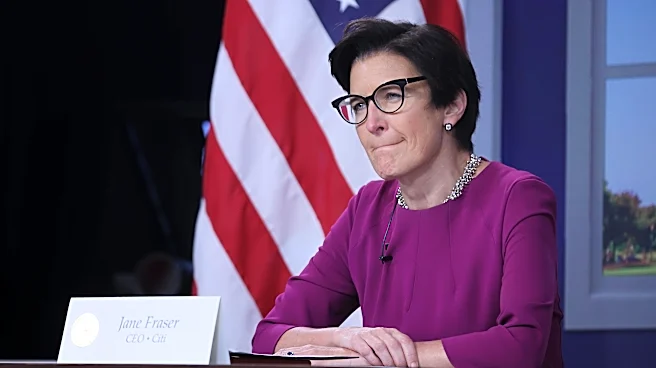
JPMorgan is expected to continue refining and expanding this 'Navy SEAL' team model across various departments. The focus will likely remain on identifying areas where specialized, agile units can deliver superior results and client satisfaction. Leaders like Keith Canton and Matt Tartaglia will continue to build their teams, prioritizing expertise and adaptability. The bank will also likely monitor the performance of these smaller units to assess their impact on overall efficiency, client retention, and market share. Other Wall Street firms, such as Citibank, which is also pursuing flatter structures, will likely observe JPMorgan's progress closely. This trend suggests a potential industry-wide move towards more decentralized and specialized operational models, driven by the need for speed and innovation in a rapidly evolving financial landscape. Future developments may include further internal reorganizations and a continued emphasis on talent development within these specialized teams.
Beyond the Headlines
The adoption of a 'Navy SEAL' team structure by a financial giant like JPMorgan reflects a deeper cultural and operational shift in corporate America. It challenges the traditional notion that scale inherently leads to inefficiency, suggesting that large organizations can maintain agility by decentralizing decision-making and empowering smaller, expert groups. This model has ethical implications regarding accountability within these highly autonomous units and the potential for 'groupthink' if not managed carefully. Legally, the increased autonomy of these teams might necessitate new frameworks for oversight and compliance, especially in a heavily regulated industry like finance. Culturally, it signifies a move towards a more meritocratic and performance-driven workplace, where individual expertise and team collaboration are highly valued. In the long term, this could lead to a fundamental redefinition of corporate structure, emphasizing specialized competencies and dynamic team formations over rigid hierarchies, ultimately impacting how large U.S. businesses innovate and compete globally.