





What's Happening?
The Indonesian Rupiah (IDR) is gaining momentum, leading to a second consecutive day of losses for the USD/IDR pair, which is trading around 18,060 during European hours on Tuesday. The Rupiah's strength is attributed to broader regional gains and a decline
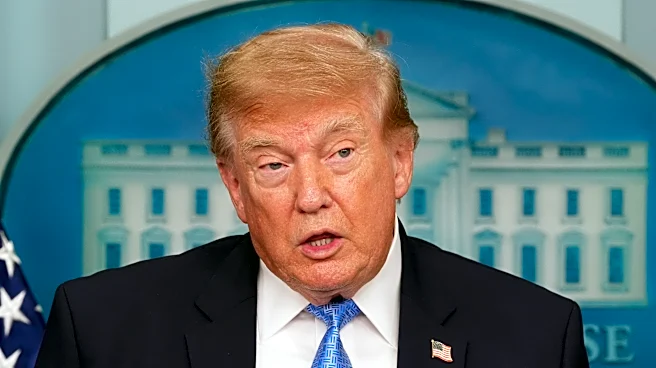
in crude oil prices, which has reduced Indonesia's import bill. Bank Indonesia (BI) has also intervened in the market to stabilize the currency, supported by a slight increase in foreign exchange reserves for October. Indonesia's economy has shown strong performance, with Q3 GDP growth accelerating to 5.47% year-over-year, surpassing the 5.2% consensus. This growth is driven by resilient domestic demand and strong export performance. Meanwhile, the US Dollar (USD) is facing downward pressure as safe-haven demand diminishes due to speculation of a diplomatic breakthrough between Washington and Tehran. President Trump's statements suggesting further military strikes against Iran are unnecessary have also contributed to the dollar's weakness.
Why It's Important?
The strengthening of the Indonesian Rupiah against the US Dollar has several significant implications. For Indonesia, a stronger Rupiah can help curb inflation by making imports cheaper, which is particularly beneficial given its status as a net importer of crude oil. It also reflects underlying economic strength, driven by robust GDP growth and export performance, which can attract foreign investment. For the U.S., the weakening dollar against currencies like the Rupiah indicates a shift in global risk sentiment. The decline in safe-haven demand for the dollar, partly due to de-escalating geopolitical tensions in the Middle East, suggests increased investor confidence in global stability. This trend can affect U.S. trade balances and the competitiveness of American exports. Furthermore, the Federal Reserve's hawkish signals, despite the dollar's broader softness, highlight the ongoing tension between domestic monetary policy objectives and global market dynamics.
What's Next?
The trajectory of the Indonesian Rupiah will likely continue to be influenced by global commodity prices, particularly crude oil, and regional economic performance. Further declines in oil prices could provide additional support for the Rupiah by easing Indonesia's import burden. Bank Indonesia's ongoing market interventions and its foreign exchange reserve management will also play a crucial role in maintaining currency stability. For the US Dollar, its direction will depend on further developments in geopolitical situations, especially regarding U.S.-Iran relations, and the Federal Reserve's monetary policy decisions. If speculation of diplomatic breakthroughs continues, safe-haven demand for the dollar may further diminish. Conversely, any resurgence of geopolitical tensions or stronger hawkish signals from the Fed could provide some support for the greenback. Investors will closely monitor upcoming economic data from both Indonesia and the U.S. for further guidance.
Beyond the Headlines
The current strengthening of the Indonesian Rupiah and the weakening of the US Dollar reflect broader shifts in the global economic and geopolitical landscape. Indonesia's economic resilience, driven by strong domestic demand and exports, positions it favorably in emerging markets. This could lead to increased foreign direct investment and a more diversified economic base, reducing its vulnerability to external shocks. For the U.S., a sustained weakening of the dollar could prompt a re-evaluation of its trade policies and economic strategies, as it impacts the cost of imports and the competitiveness of exports. The interplay between geopolitical developments, such as the de-escalation of tensions in the Middle East, and currency markets underscores how non-economic factors can significantly influence financial flows and asset valuations. This situation also highlights the ongoing debate within the Federal Reserve regarding the balance between controlling inflation through tighter monetary policy and managing the broader implications of a strong or weak dollar on the U.S. economy and its global standing.