




What's Happening?
JPMorgan has significantly increased its Bitcoin-related holdings, as detailed in a recent filing. The bank's stake in BlackRock’s Bitcoin ETF rose by 9.6% to 11,408,930 shares, valued at approximately $540 million. Beyond ETFs, JPMorgan's portfolio now
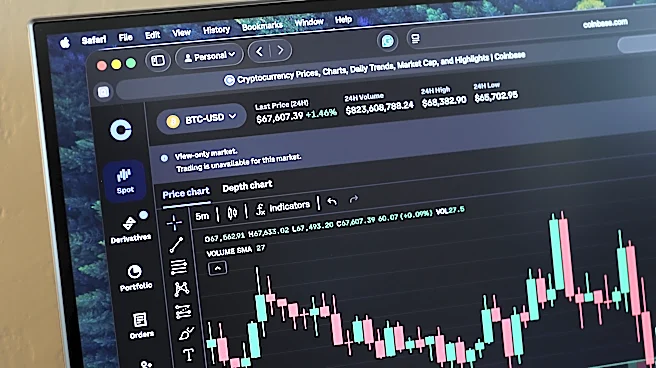
includes 1,581,814 Coinbase shares and a stake in Robinhood. Furthermore, the bank has reported positions in several Bitcoin mining companies, including Core Scientific, CleanSpark, Hut 8, MARA Holdings, and Riot Platforms. These mining stocks represent another component of the crypto-related securities disclosed in the filing. While the bank's overall Bitcoin-related holdings grew, its stake in 'Strategy' (likely MicroStrategy) saw a 36% increase in shares, though the implied value of this position decreased by approximately 26% due to a decline in Strategy's stock price. Bitcoin itself experienced a 7% drop in the 24 hours preceding the report, falling below $69,000.
Why It's Important?
JPMorgan's expanded investment in Bitcoin-related assets, particularly its direct stakes in cryptocurrency exchanges and mining operations, signals a growing institutional acceptance and integration of digital assets into traditional finance. This move by a major financial institution like JPMorgan can lend further legitimacy to the cryptocurrency market, potentially encouraging other large banks and institutional investors to follow suit. The inclusion of Bitcoin mining companies in its portfolio highlights a strategic interest in the infrastructure supporting the cryptocurrency ecosystem, suggesting a long-term view on the sector's growth. For the U.S. financial market, this could mean increased liquidity and stability in crypto markets, but also greater exposure to their inherent volatility. The fluctuating value of these holdings, as seen with the decline in 'Strategy's' implied value and Bitcoin's recent dip, underscores the risks involved, even for sophisticated investors.
What's Next?
The increased institutional involvement from entities like JPMorgan could lead to further mainstream adoption of cryptocurrencies and blockchain technology. Future filings from JPMorgan and other financial giants will be closely watched for continued trends in crypto investment. The performance of these Bitcoin-related holdings will likely influence investment strategies across the financial sector. Regulatory bodies may also pay closer attention to the extent of traditional banks' exposure to volatile crypto assets, potentially leading to new guidelines or oversight. The ongoing competition for resources, such as electricity, between Bitcoin mining and other high-demand sectors like AI, could also impact the profitability and operational stability of the mining companies in which JPMorgan has invested.
Beyond the Headlines
JPMorgan's deepening foray into the crypto space, especially its investments in mining companies, reflects a broader shift in how traditional finance views digital assets—not just as speculative instruments, but as integral components of a new financial infrastructure. This strategic diversification could be a hedge against inflation or a bet on the long-term value of decentralized finance. However, it also raises questions about the environmental impact of Bitcoin mining, given the energy consumption of these operations, and how traditional financial institutions will reconcile their sustainability goals with such investments. The move could also blur the lines between traditional banking and the nascent crypto industry, potentially leading to new hybrid financial products and services that cater to both conventional and digital asset investors.