




What's Happening?
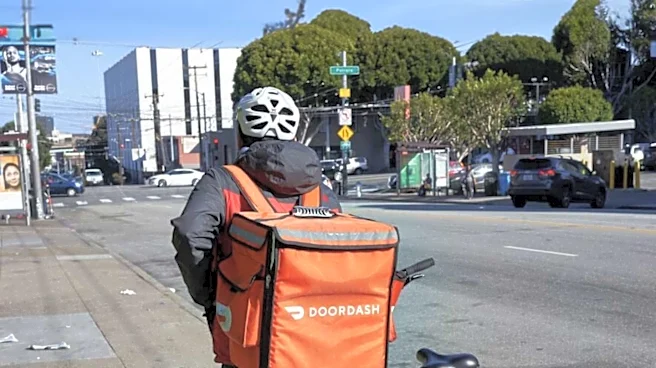
Costco Wholesale Corp. has reported a significant 20% increase in e-commerce sales this year, driven by the expansion of its same-day delivery services. The company has broadened its partnerships with third-party delivery providers, including DoorDash
and Uber Technologies, to extend same-day delivery options to more U.S. customers. This month, DoorDash announced Costco's availability on its Marketplace across the United States, offering same-day delivery. Similarly, Uber expanded its Costco partnership, making on-demand or scheduled deliveries through Uber Eats available in 47 states, a substantial increase from the previous 17 states. These new collaborations complement Costco's existing relationship with Instacart. According to Ron Vachris, Costco’s chief executive officer, the majority of these same-day deliveries are completed within 45 minutes, catering to a growing demand for immediate service, particularly among younger customers.
Why It's Important?
Costco's robust e-commerce growth and expanded delivery partnerships signify a strategic adaptation to evolving consumer preferences in the U.S. retail landscape. By enhancing its same-day delivery capabilities, Costco is better positioned to compete with other major retailers and online grocery services, retaining and attracting customers who prioritize convenience and speed. This move is particularly important as it addresses the 'fill-in shop' needs of members, complementing their traditional club visits. The focus on rapid delivery times, often within 45 minutes, sets a high bar for efficiency in the retail sector. This strategy not only boosts digital engagement and sales but also reinforces Costco's market position by catering to a younger demographic that values immediacy, ensuring long-term member retention and growth in a competitive market.
What's Next?
Costco is expected to continue leveraging its expanded delivery network to further integrate its online and in-store shopping experiences. The company's reaffirmation of plans for 30 net new warehouses per year, alongside continued digital engagement, suggests a dual strategy of physical expansion and digital enhancement. Future developments may include optimizing delivery routes, exploring new technological solutions for order fulfillment, and potentially introducing more personalized delivery options. The success of these partnerships could also lead to deeper collaborations with DoorDash and Uber, potentially expanding the range of products available for same-day delivery or introducing new service tiers. Competitors will likely observe Costco's success closely, potentially leading to similar expansions in their own third-party delivery alliances.
Beyond the Headlines
The trend of warehouse clubs like Costco embracing extensive third-party delivery partnerships reflects a broader shift in retail towards a hybrid model that combines the benefits of bulk purchasing with the convenience of on-demand delivery. This evolution challenges the traditional 'destination shopping' model of warehouse clubs, making their offerings accessible to a wider, more diverse customer base. The emphasis on speed, with deliveries often completed within 45 minutes, underscores the increasing consumer expectation for instant gratification, which has profound implications for supply chain management and logistics. Furthermore, the reliance on gig economy platforms like DoorDash and Uber for delivery raises ongoing discussions about labor practices, worker classification, and the future of employment in the retail and logistics sectors.