



What's Happening?
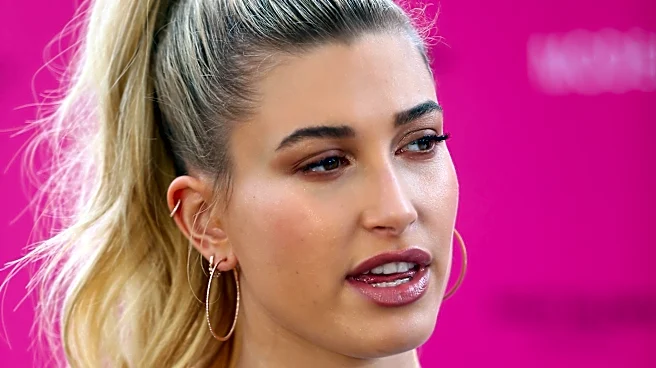
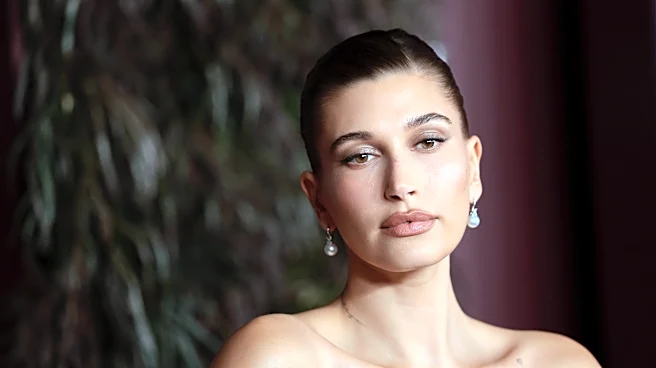
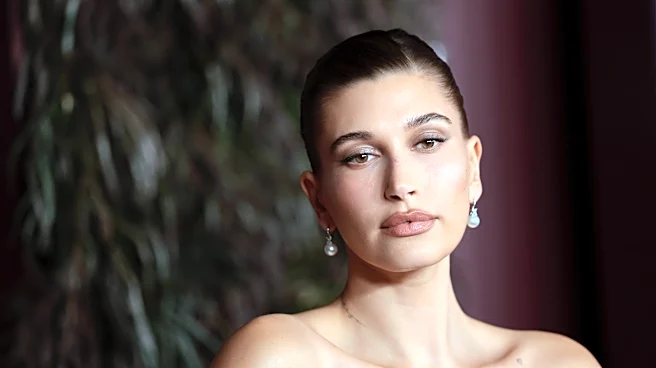
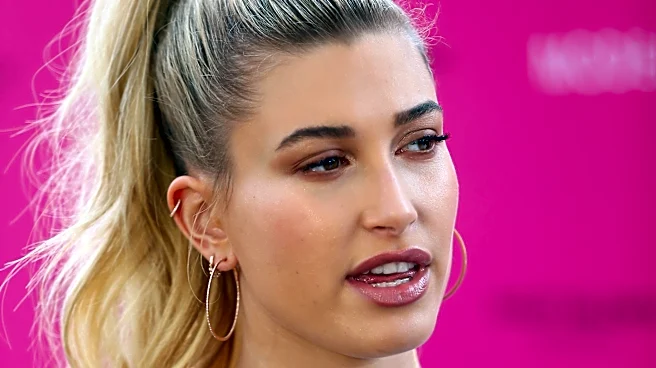
Andrew Ross Sorkin, a financial columnist for The New York Times and host of the DealBook Summit, has drawn criticism from fans of Hailey Bieber. The controversy arose after Sorkin interviewed Bieber on November 18, 2026, at the DealBook Summit in New York City.
During the interview, Sorkin questioned Bieber about the $1 billion sale of her beauty company, Rhode, to e.l.f. Beauty in May 2025. Bieber stated that she had set the $1 billion figure as her minimum sale price from the outset, describing this ambition as 'delusion.' Sorkin pressed her on why she believed she could achieve such a high valuation for Rhode. This line of questioning led to backlash from Bieber's fans, who expressed their disapproval of Sorkin's 'probing' questions.
Why It's Important?
This event highlights the evolving dynamics between traditional journalism and celebrity culture, particularly in the context of business and finance. Sorkin, known for his incisive questions to high-profile figures, approached the interview from a journalistic perspective, seeking to understand the financial rationale behind Rhode's valuation and sale. However, the reaction from Bieber's fanbase underscores a common tension where celebrity interviews are often expected to be less confrontational. The incident also brings attention to the valuation of celebrity-backed brands, where personal branding and product development can significantly influence market worth, sometimes leading to valuations that traditional financial analysis might question. This scenario prompts a discussion on the role of 'delusion' or extreme optimism in entrepreneurial success and how it is perceived by both the public and financial journalists.
What's Next?
The immediate aftermath of this event will likely involve continued discussions on social media platforms regarding journalistic ethics and celebrity interviews. Andrew Ross Sorkin may continue to face scrutiny from Hailey Bieber's fans, while others might defend his journalistic approach. For Hailey Bieber, the incident could further solidify her image as a determined entrepreneur, capable of achieving ambitious goals despite perceived 'delusion.' The broader implications might include a re-evaluation by event organizers and interviewers on how to balance probing financial questions with the public's expectations for celebrity appearances. Future DealBook Summits and similar events may see increased attention on the types of questions posed to celebrity entrepreneurs and the subsequent public reaction.
Beyond the Headlines
The incident touches upon deeper themes concerning the intersection of celebrity, entrepreneurship, and media scrutiny. It raises questions about the nature of 'value' in the modern economy, particularly for brands heavily reliant on personal influence. The concept of 'optimistical delusion' as a driver for business success, as articulated by Bieber, challenges conventional business wisdom that often emphasizes meticulous planning and realistic projections. Furthermore, the fan reaction to Sorkin's questions highlights a cultural shift where public figures are often shielded from critical inquiry by their devoted followers, potentially impacting the ability of journalists to conduct thorough interviews. This dynamic could lead to a broader debate about the responsibilities of journalists when interviewing celebrities who are also business leaders.