







What's Happening?
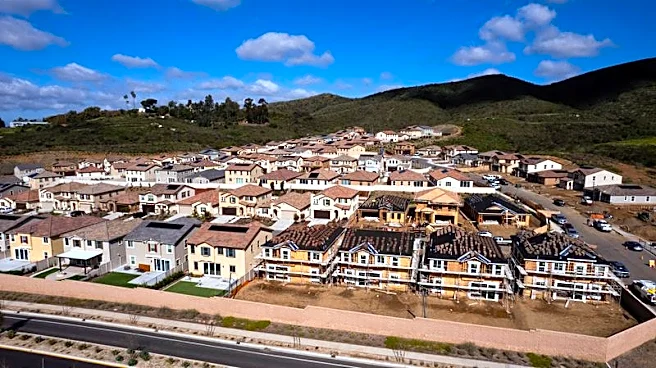
New home sales in the U.S. saw a modest increase in June, rising by 1.6% to an annualized rate of 628,000 units, according to the Commerce Department. However, the housing market continues to face challenges due to rising mortgage rates, which have reached
their highest levels in 11 months. The average 30-year mortgage rate climbed to 6.58%, driven by inflation concerns and global economic factors. Despite the uptick in sales, higher borrowing costs are sidelining potential buyers, as the median new house price fell by 2.7% compared to the previous year.
Why It's Important?
The housing market is a critical component of the U.S. economy, influencing consumer spending and economic growth. Rising mortgage rates can deter potential homebuyers, slowing down the housing market recovery and impacting related industries such as construction and real estate. The Federal Reserve's monetary policy decisions, aimed at controlling inflation, are closely linked to these developments. As borrowing costs increase, the affordability of homes decreases, potentially leading to a slowdown in economic activity and affecting the broader financial landscape.
What's Next?
The Federal Reserve is set to hold a policy meeting soon, where interest rate decisions will be a focal point. Market expectations suggest a potential rate hike in the coming months, which could further influence mortgage rates and the housing market. Stakeholders in the real estate and financial sectors are preparing for potential shifts in market dynamics, as the Fed's actions will play a crucial role in shaping economic conditions. The ongoing monitoring of inflation and economic indicators will guide future policy decisions, impacting the housing market's trajectory.