
What's Happening?
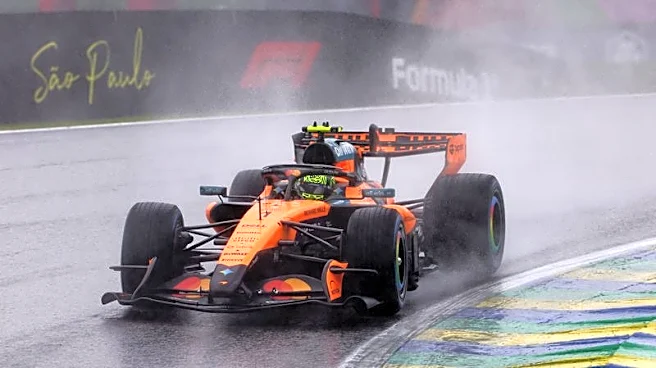
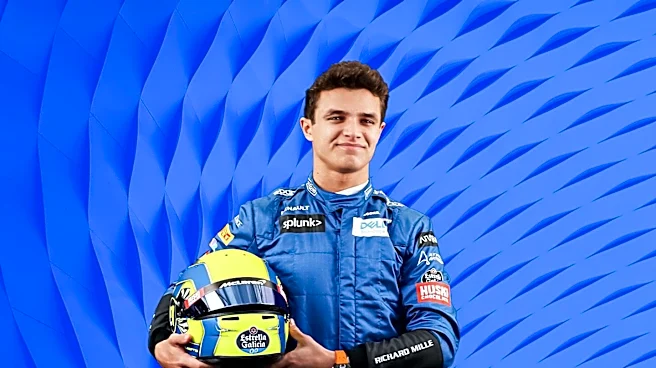
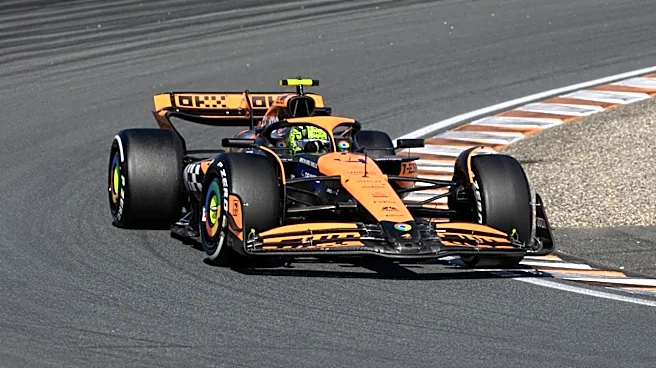
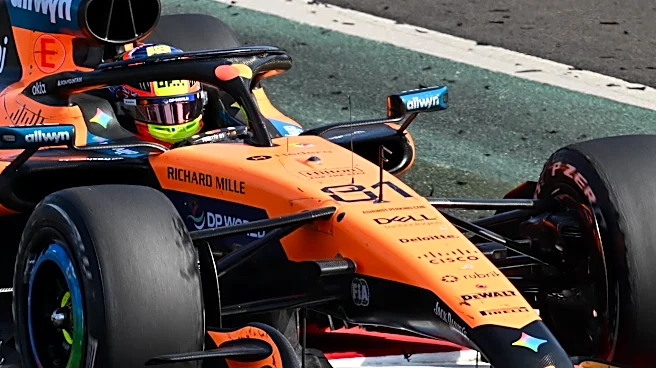
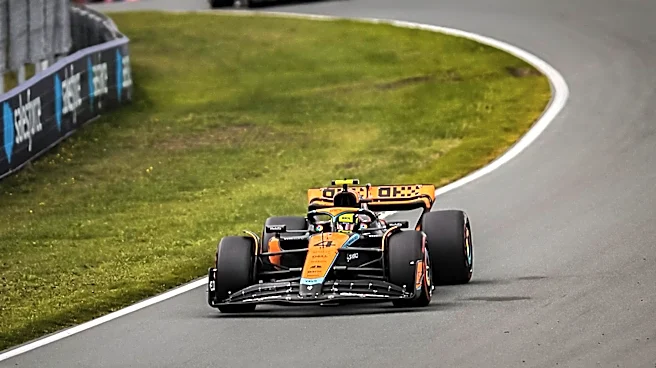
Lando Norris mastered the challenging wet conditions at the Interlagos circuit to secure pole position for the Sao Paulo Grand Prix. Heavy rain significantly delayed the qualifying session, creating a chaotic
environment for all drivers. Despite the adverse weather, Norris delivered a standout performance, beating George Russell to claim the top spot on the grid. The official Formula 1 coverage highlighted Norris's exceptional skill in navigating the treacherous wet track, showcasing how he excelled when many others struggled. This pole position marks a significant achievement for Norris and his team, demonstrating their ability to perform under high-pressure, unpredictable circumstances. The conditions made for a dramatic qualifying session, with drivers battling not only each other but also the elements.
Why It's Important?
Lando Norris's pole position in the wet Sao Paulo qualifying is important as it underscores the critical role of driver skill and adaptability in Formula 1, especially in unpredictable weather conditions. Such performances can significantly boost a driver's confidence and team morale, potentially setting a positive tone for the race and future events. For McLaren, this achievement signals their car's capability and the team's strategic prowess in managing difficult situations. It also adds an element of excitement and unpredictability to the Grand Prix, as starting positions gained in chaotic sessions often lead to more dynamic races. This result can influence championship standings by giving Norris a crucial advantage, and it highlights how rapidly changing track conditions can level the playing field, allowing exceptional talent to shine through regardless of car performance differences.
What's Next?
Following his pole position, Lando Norris will start the Sao Paulo Grand Prix from the front of the grid, giving him a strategic advantage. The immediate next step is the race itself, where he will aim to convert his pole into a victory or a strong podium finish. His performance in qualifying suggests he is well-prepared for varying track conditions, which could be crucial if the weather remains unpredictable. For his competitors, starting behind Norris means they will need to devise strategies to overtake him, potentially leading to aggressive racing and exciting battles. This pole position also builds momentum for Norris and McLaren for the remainder of the season, potentially influencing their approach to future qualifying sessions and race strategies. The team will be focused on maintaining this competitive edge.
Beyond the Headlines
Beyond the immediate race implications, Lando Norris's performance in the wet qualifying session highlights the psychological aspect of Formula 1. Mastering such challenging conditions requires not only technical skill but also immense mental fortitude, precision, and risk assessment. This ability to perform under extreme pressure can define a driver's reputation and legacy. Ethically, it raises questions about driver safety in adverse weather, as teams and race control must balance competitive excitement with ensuring driver well-being. Culturally, such dramatic qualifying sessions often become iconic moments in F1 history, remembered for the sheer spectacle and the display of human skill against nature. These events contribute to the narrative of Formula 1 as a sport where human and machine are pushed to their absolute limits, captivating fans worldwide and reinforcing the allure of high-stakes motorsport.