






What's Happening?
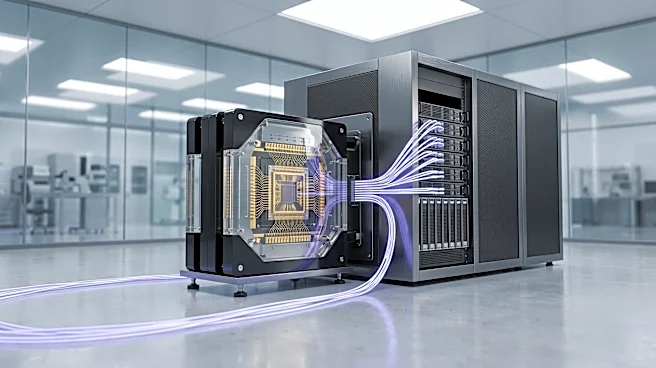
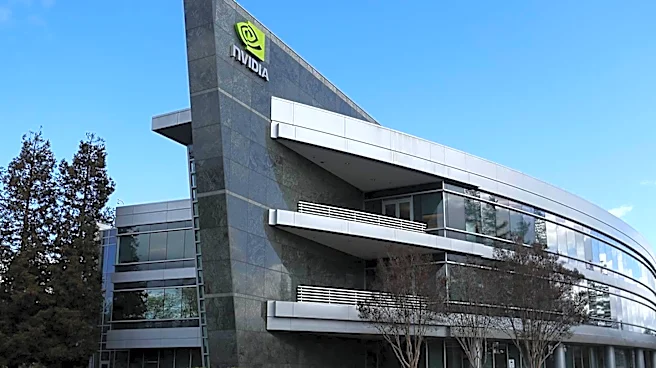
IonQ has announced that its Superion 256 quantum processor unit (QPU) will be deployed at NVIDIA’s Accelerated Quantum Research Center (NVAQC). This marks the first time a quantum processor will be integrated into NVIDIA's research facility. The Superion 256 will operate
alongside NVIDIA’s GB200 NVL72 system, utilizing NVIDIA NVQLink for connectivity and CUDA-Q for orchestration. This integration aims to combine quantum computing, accelerated computing, and artificial intelligence (AI) infrastructure within a single research environment. The initiative is driven by the understanding that the future of computing will be hybrid, moving beyond standalone quantum computers to systems where QPUs work in conjunction with GPUs, CPUs, and AI models to solve complex problems. The research will focus on areas such as financial modeling, materials science, computational chemistry, and new approaches to quantum-GPU co-design.
Why It's Important?
This collaboration between IonQ and NVIDIA represents a significant step in the evolution of supercomputing infrastructure in the U.S. By integrating quantum processors with traditional high-performance computing systems, researchers can explore solutions to problems that are currently intractable for either technology alone. This hybrid approach could accelerate breakthroughs in various critical sectors, including finance, where complex models require immense computational power, and materials science, which could lead to the development of new technologies and products. The initiative also highlights a strategic shift in how quantum computing is perceived and developed, moving from a niche, theoretical field to an integral component of advanced computing ecosystems. This could solidify the U.S.'s leadership in quantum technology and its applications, fostering innovation and potentially creating new industries and job opportunities.
What's Next?
The deployment of IonQ's Superion 256 at NVIDIA's Accelerated Quantum Research Center will initiate a new phase of research into hybrid computing architectures. The immediate next steps will involve setting up and optimizing the integrated system, followed by conducting experiments in the identified research areas like financial modeling and materials science. The findings from this research are expected to inform the development of future quantum-classical co-design strategies and potentially lead to the creation of new algorithms and software tools for hybrid computing. Success in these early stages could encourage further investment and collaboration between quantum computing companies and traditional tech giants, accelerating the commercialization and widespread adoption of quantum-enhanced solutions across various industries. The project will also likely contribute to the broader understanding of how quantum and classical systems can best complement each other.
Beyond the Headlines
The integration of quantum processors with classical supercomputing infrastructure carries profound implications beyond immediate research outcomes. It signifies a paradigm shift in how computational challenges are approached, potentially leading to a 'quantum leap' in problem-solving capabilities. This development could redefine the boundaries of what is computationally possible, impacting fields from drug discovery and climate modeling to cryptography and artificial intelligence. Ethically, the enhanced computational power could raise questions about data security and the responsible use of advanced technologies. Legally, intellectual property rights for quantum-derived innovations will become increasingly complex. Culturally, this advancement could spark a new wave of scientific and technological enthusiasm, attracting talent and investment into quantum-related fields, ultimately shaping the future of technological innovation and national competitiveness.