







What's Happening?
Seven Israeli teenagers, participating in the Mamriot and Magshimim Cyber and AI programs, have developed 'Flair,' a digital stylist designed to simplify online clothing selection. The project, a collaboration with Israeli fashion retailer Factory 54
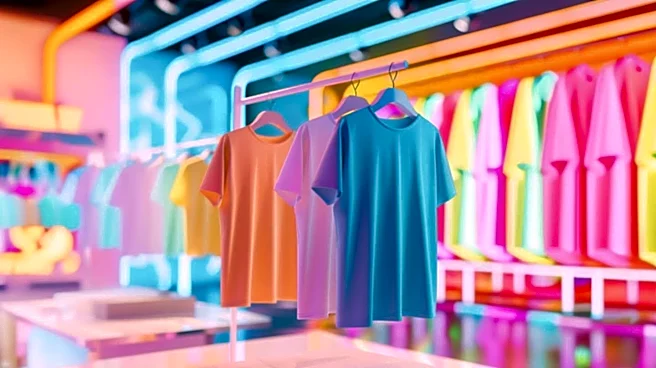
and the Rashi Foundation, aims to address the common frustration of sifting through numerous products online. Flair's algorithm, written in Python and JavaScript, creates outfit recommendations based on user input, including clothing size, shoe size, skin tone, hair color, eye color, and event type. The system categorizes clothing items by attributes like color, style, and season, then filters and combines them to suggest complete outfits. While presented as AI-based, the developers describe Flair as primarily a rule-based recommendation algorithm operating on a structured database, focusing on logical component fitting before incorporating style and trend rules. The team also built a demonstration website where users can complete a questionnaire and receive visual outfit recommendations.
Why It's Important?
The development of Flair highlights a growing trend in leveraging technology to personalize and streamline consumer experiences, particularly in the e-commerce sector. For the U.S. retail industry, this innovation could signify a shift towards more intelligent and user-centric online shopping platforms. By reducing decision fatigue and offering tailored suggestions, such tools could enhance customer satisfaction and potentially increase conversion rates for online fashion retailers. The project also underscores the increasing importance of STEM education and interdisciplinary collaboration, as these teenagers applied their cyber and AI skills to solve a real-world consumer problem. This could inspire similar initiatives in the U.S., fostering a new generation of tech-savvy entrepreneurs capable of disrupting traditional markets. Furthermore, the focus on individual preferences and event-specific styling could lead to more efficient inventory management and reduced returns for businesses, as customers are more likely to be satisfied with their purchases.
What's Next?
Currently, Flair remains a demo, and its developers acknowledge that it has not yet fully solved the subjective challenge of determining what genuinely looks good on a particular person. The next steps for Flair could involve further refinement of its algorithm to incorporate more nuanced style preferences and potentially integrate machine learning to adapt to individual user feedback over time. This could involve gathering data on user selections and rejections to continuously improve recommendation accuracy. The success of this demo could also attract investment or partnerships with larger fashion tech companies or retailers, potentially leading to its commercialization. Future iterations might explore integrating augmented reality features, allowing users to virtually 'try on' recommended outfits. Additionally, the project's success could encourage more educational programs in the U.S. to focus on practical applications of AI and cyber skills, bridging the gap between academic learning and industry needs.
Beyond the Headlines
Beyond its immediate application in fashion, Flair represents a broader societal shift towards algorithmic decision-making in everyday life. This raises questions about the balance between convenience and personal agency, as algorithms increasingly influence choices that were once purely human. While Flair aims to simplify fashion decisions, the long-term implications could extend to other areas, potentially shaping consumer tastes and trends in subtle ways. There's also an ethical dimension concerning data privacy and how personal characteristics are used to generate recommendations. As such technologies become more sophisticated, discussions around algorithmic bias and the potential for homogenization of style will become increasingly relevant. The project also serves as a testament to the innovative potential of young minds when provided with the right resources and challenges, highlighting the importance of fostering STEM education and entrepreneurial spirit among youth.