







What's Happening?
NANO Nuclear Energy, a North American advanced technology nuclear energy company, has entered into a three-year Engineering Services Master Agreement (ESMA) with the U.S. subsidiary of IMPSA. IMPSA is an Argentine company specializing in engineering,
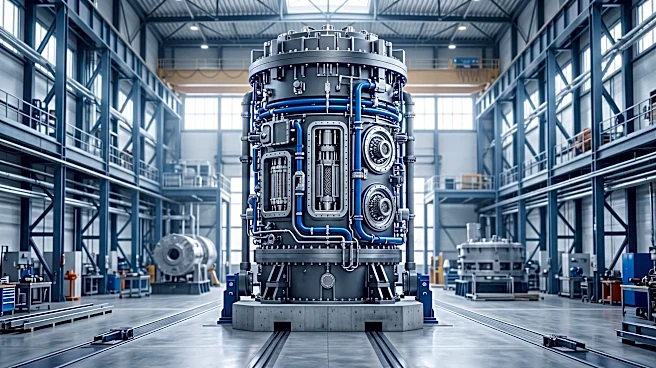
design-for-manufacture, and fabrication of critical components for nuclear power plants. This agreement focuses on NANO Nuclear's KRONOS MMR Energy System, a stationary high-temperature gas-cooled microreactor. The pact establishes a framework for NANO Nuclear to leverage IMPSA's extensive experience in nuclear pressure vessels, ASME Section 3 manufacturing, welding, non-destructive examination, quality assurance, and heavy-component fabrication. The initial phase of the agreement includes a KRONOS MMR Design Review Assessment-Engineering Consulting and Manufacturability Feasibility Study, expected to last approximately six months. This collaboration aims to advance the KRONOS MMR design towards manufacturing readiness, with IMPSA evaluating key components like the reactor pressure vessel and potentially other systems such as reactor cavity cooling systems and spent-fuel storage.
Why It's Important?
This partnership is significant for the advancement of microreactor technology in the United States and globally. By collaborating with IMPSA, NANO Nuclear Energy gains access to over a century of specialized expertise in nuclear component manufacturing and engineering, which is crucial for the safe and efficient development of its KRONOS microreactor. The agreement underscores a growing trend in the nuclear sector towards strategic partnerships to share responsibilities and leverage complementary strengths, accelerating the deployment of advanced nuclear solutions. For the U.S. energy landscape, successful development and deployment of microreactors like KRONOS could offer decentralized, reliable, and carbon-free power sources, enhancing energy security and contributing to decarbonization goals. This move also highlights the increasing momentum in the nuclear and clean energy sector, attracting investment and fostering innovation in next-generation energy technologies.
What's Next?
The immediate next step involves the dedicated KRONOS MMR Design Review Assessment-Engineering Consulting and Manufacturability Feasibility Study, which is projected to span six months. This initial phase will provide critical insights into the manufacturability and design optimization of the KRONOS microreactor components. Following this assessment, NANO Nuclear and IMPSA will likely proceed with further engineering and potentially fabrication phases as the KRONOS MMR design matures. The long-term nature of the three-year agreement suggests a sustained collaboration that could expand beyond the initial scope to include additional reactor and transportation components. The progress of this partnership will be closely watched by stakeholders in the nuclear energy sector, as it could set a precedent for future collaborations in developing and deploying advanced nuclear technologies.
Beyond the Headlines
This engineering pact reflects a broader strategic shift in the nuclear industry towards modular and smaller reactor designs, known as microreactors. These reactors offer advantages such as scalability, reduced construction times, and suitability for remote locations or specialized applications. The collaboration with an experienced international firm like IMPSA also highlights the global nature of nuclear technology development and the importance of international partnerships in overcoming complex engineering challenges. Furthermore, the emphasis on ASME Section 3 manufacturing and quality assurance underscores the rigorous safety and regulatory standards required in the nuclear industry, ensuring that these advanced designs meet the highest safety benchmarks. This partnership could also contribute to strengthening the domestic nuclear supply chain by fostering expertise and capabilities in critical component manufacturing.