






What's Happening?
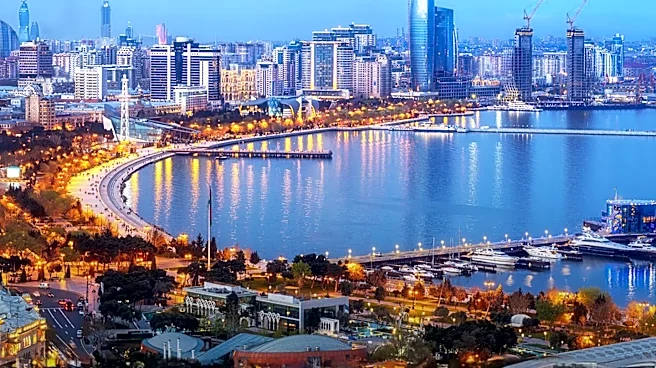
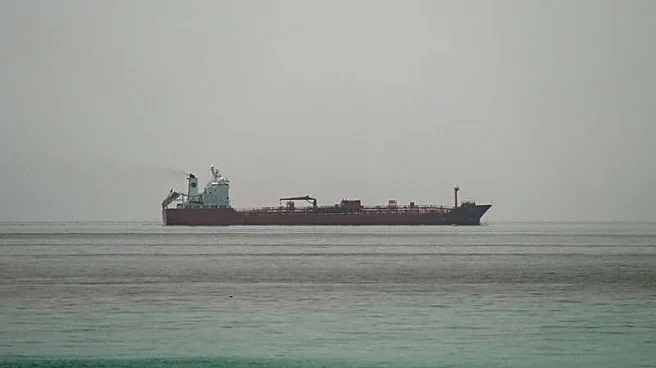
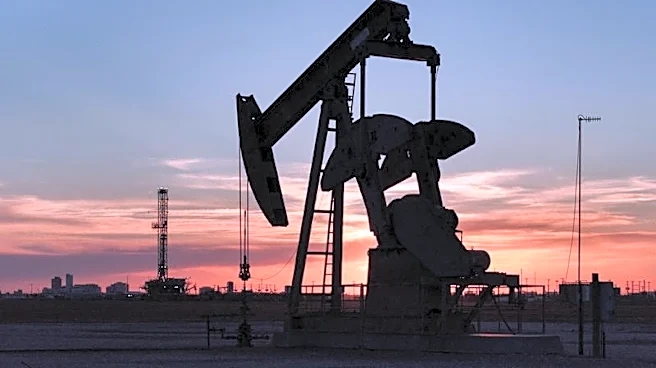
The Dutch ING Group has released a report indicating that an additional $10 per barrel increase in oil prices could elevate Azerbaijan's annual exports by 2-4% of its Gross Domestic Product (GDP). This projection highlights Azerbaijan's economic stability,
with higher oil prices reinforcing its financial buffers. The country's manat peg is noted to limit imported inflation, and with the Consumer Price Index (CPI) within the target range of 4% ± 2%, the policy rate is expected to remain at 6.50%. The report also suggests that while the regional rates for CIS-4 countries (Azerbaijan, Armenia, Kazakhstan, and Uzbekistan) and their currencies are generally constructive and domestically driven, their resilience to persistent global inflation and higher core rates could be tested through exchange rate channels. Despite this, a sell-off is not anticipated, though high real rates will be necessary to attract portfolio inflows.
Why It's Important?
This analysis is important for understanding the economic resilience of oil-exporting nations like Azerbaijan in the face of global energy market fluctuations. For the U.S., such stability in energy-producing regions can contribute to global energy security, indirectly influencing international oil prices and supply chains that affect American consumers and industries. The report's emphasis on the manat peg and its role in limiting imported inflation in Azerbaijan provides insight into currency management strategies that could be relevant for other economies. Furthermore, the discussion of attracting portfolio inflows through high real rates underscores the ongoing global competition for investment capital, a factor that can impact U.S. financial markets and foreign investment strategies. The broader economic health of these regions can also influence geopolitical stability, which is of strategic interest to the U.S.
What's Next?
Looking ahead, central banks in the CIS-4 region, including Azerbaijan, may face challenges in maintaining their current policy rates if global inflation persists. The ING Group suggests that in an adverse global scenario, there could be a 1-2 percentage point upside risk to the medium-term inflation outlook. While the cost-driven nature of such a shock might not necessitate an immediate policy response, central banks may need to protect real rates. This could lead to further tightening in Armenia, reduced room for cuts in Kazakhstan and Uzbekistan, and a potential challenge to Azerbaijan's reluctance to hike rates. These potential policy adjustments could influence investment flows and economic growth trajectories in the region, with indirect implications for U.S. businesses operating or considering investments there.
Beyond the Headlines
The report subtly highlights the intricate balance between domestic economic policies and global market forces. Azerbaijan's reliance on oil exports, while providing significant economic benefits during price surges, also exposes it to the volatility of the global oil market. The mention of the manat peg, while currently beneficial for limiting inflation, could become a point of vulnerability if external economic pressures intensify, potentially leading to difficult policy choices. This situation underscores a broader theme in resource-rich economies: the challenge of diversifying economic drivers to reduce dependence on a single commodity. For the U.S., understanding these dynamics is crucial for formulating effective foreign policy and economic engagement strategies in regions that are vital for global energy supply.