









What's Happening?
The Leep Ring, developed by Leep Health Ltd, is emerging as a competitor to the established Oura Ring in the smart ring market. Unlike Oura, which relies on a cloud-dependent, subscription-based model, the Leep Ring offers an edge-computed, offline-first
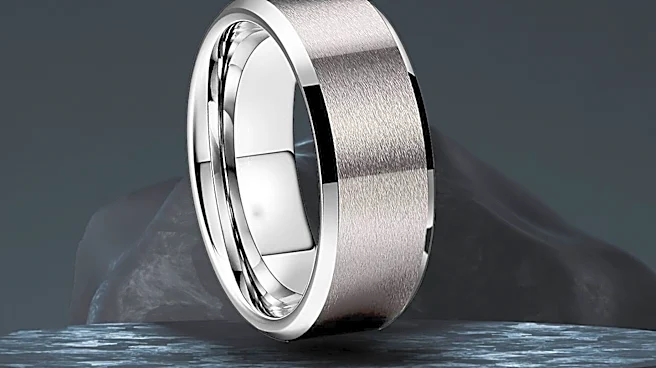
architecture with no subscription fees. This design allows for local data processing, enhancing privacy and reducing dependency on cloud services. The Leep Ring is constructed with a titanium shell and features a suite of biometric sensors, including a multi-wavelength optical PPG array, accelerometer, and thermistor array. These components enable the ring to monitor various health metrics such as heart rate, heart rate variability, and sleep stages. The device is priced at approximately $199, significantly lower than Oura's $349 to $699 range, and does not require ongoing subscription fees.
Why It's Important?
The introduction of the Leep Ring represents a significant shift in the smart ring market, challenging the dominance of subscription-based models like Oura's. By eliminating recurring fees and focusing on privacy through local data processing, Leep is making biometric tracking more accessible to a broader audience. This could pressure other companies to reconsider their pricing and data management strategies. The Leep Ring's approach may appeal to privacy-conscious consumers and those looking for a cost-effective alternative to traditional health wearables. Additionally, the focus on long-term wellness trends rather than daily scores could reduce anxiety associated with health tracking, potentially attracting users who are wary of the hyper-quantification trend in wearable technology.
What's Next?
As the Leep Ring gains traction, it may prompt established players like Oura to innovate further or adjust their business models to maintain market share. The focus on privacy and cost-effectiveness could lead to increased competition in the smart ring sector, driving advancements in technology and user experience. Additionally, the success of the Leep Ring could inspire other companies to explore edge-computed solutions, potentially leading to a broader shift in how health data is managed and monetized. Consumer response to the Leep Ring will likely influence future developments in wearable technology, particularly in terms of balancing functionality, privacy, and cost.