






What's Happening?
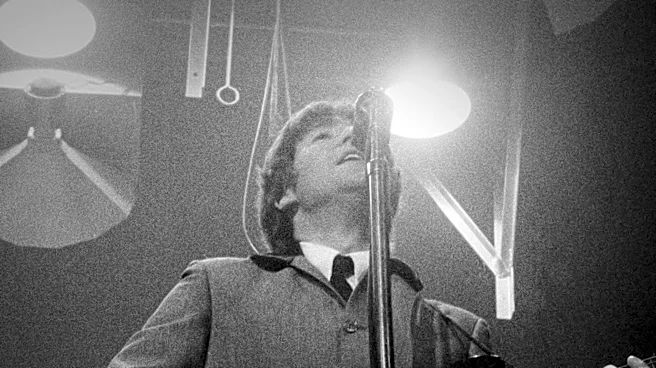
Paul McCartney has revealed that John Lennon's 1980 song 'Beautiful Boy' (Darling Boy) holds significant emotional weight for him, providing comfort after Lennon's tragic death. In a 1982 interview on 'Desert Island Discs,' just two years after Lennon's murder,
McCartney named 'Beautiful Boy' as one of the eight songs he couldn't live without. He described it as a 'beautiful song, very moving to me.' The track, from Lennon's 'Double Fantasy' album, is an ode to his son, Sean, showcasing a tender and vulnerable side of Lennon. McCartney reiterated his affection for the song in 2020 during a BBC Radio 2 program with Sean Lennon, stating he always includes 'Beautiful Boy' when asked for his favorite tunes. Lennon himself described the song as self-explanatory, reflecting his deep love and pride for Sean, emphasizing his active role in his son's upbringing.
Why It's Important?
This revelation highlights the enduring bond between John Lennon and Paul McCartney, even after their complex professional and personal relationship. McCartney's choice of 'Beautiful Boy' as a source of comfort underscores the profound impact of Lennon's death on him and the personal solace he found in his late friend's music. It offers a poignant insight into the private grief of a public figure and the universal human experience of finding solace in art during loss. For fans, it provides a deeper understanding of the emotional connection between the two Beatles, moving beyond their musical partnership to their shared humanity. The song's focus on paternal love also reveals a more intimate side of Lennon, contrasting with his public persona and adding another layer to his artistic legacy. This personal connection to the song reinforces its emotional power and its significance within the broader context of their intertwined lives.
What's Next?
The continued discussion and appreciation of songs like 'Beautiful Boy' ensure that John Lennon's musical legacy, particularly his later solo work, remains relevant and cherished. Such personal endorsements from figures like Paul McCartney can introduce the song to new generations of listeners, fostering a deeper exploration of Lennon's post-Beatles catalog. It also reinforces the idea that music can serve as a powerful medium for processing grief and maintaining connections with loved ones who have passed. As time progresses, these anecdotes and personal reflections from those who knew Lennon best will continue to shape the public's understanding of his artistry and personal life, contributing to ongoing cultural conversations about his enduring impact on music and society.
Beyond the Headlines
McCartney's attachment to 'Beautiful Boy' speaks to the profound and often unspoken ways in which art can heal and connect. It illustrates how a piece of music, created by a friend, can become a vessel for memory and emotional processing, especially in the face of sudden and senseless loss. The song's theme of a father's love for his son, expressed with such vulnerability by Lennon, resonates deeply with McCartney, who also experienced significant personal losses. This shared human experience of love and loss, articulated through music, transcends the celebrity status of the individuals involved. It underscores the universal power of art to provide comfort, evoke empathy, and preserve the essence of those who are no longer with us. The choice of this particular song also highlights the evolution of Lennon's own emotional landscape, showcasing a softer, more domestic side that many might not have associated with his earlier, more rebellious image, thereby enriching his complex artistic narrative.