








What's Happening?
Qantas is set to launch one of the world's longest commercial flights, connecting Sydney and London directly without a stopover, as part of its 'Project Sunrise'. Scheduled to begin in October 2027, the flight will take between 19 and 21 hours, significantly
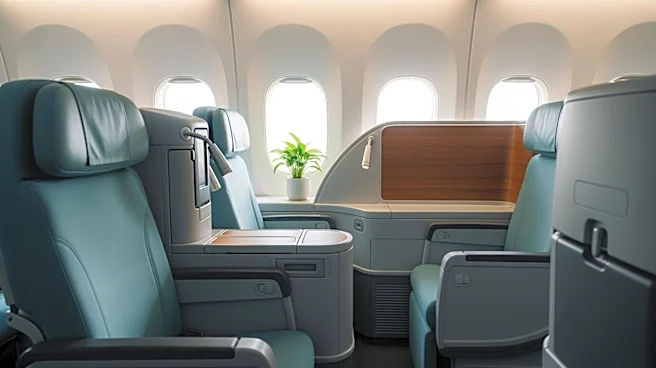
reducing travel time compared to current one-stop itineraries. The airline will use specially configured Airbus A350-1000ULR aircraft, designed for extended endurance missions. To address the physical strain of such long flights, Qantas has collaborated with sleep scientists and health researchers to develop a wellness-focused cabin design. This includes tailored lighting to simulate sunrise and sunset, and a dedicated wellness zone for stretching and movement. The project, delayed due to the COVID-19 pandemic, represents a significant investment in passenger wellbeing.
Why It's Important?
The introduction of ultra-long-haul flights by Qantas marks a significant shift in the aviation industry, emphasizing passenger wellness on long journeys. This initiative could set a new standard for long-haul travel, potentially influencing other airlines to adopt similar wellness-focused designs. The project also highlights the growing importance of passenger comfort and health in the competitive airline market. By reducing travel time and enhancing the in-flight experience, Qantas aims to attract more passengers willing to pay a premium for direct flights. This could lead to increased revenue and strengthen Qantas's position in the global aviation market.
What's Next?
As Qantas prepares to launch these ultra-long-haul flights, the airline will likely focus on marketing the wellness benefits to attract health-conscious travelers. The success of this initiative could prompt other airlines to explore similar wellness-focused innovations. Additionally, Qantas's investment in this project may encourage further research into passenger health and comfort on long flights, potentially leading to new industry standards. The airline will also need to address logistical challenges, such as crew management and aircraft maintenance, to ensure the smooth operation of these extended flights.