



What's Happening?
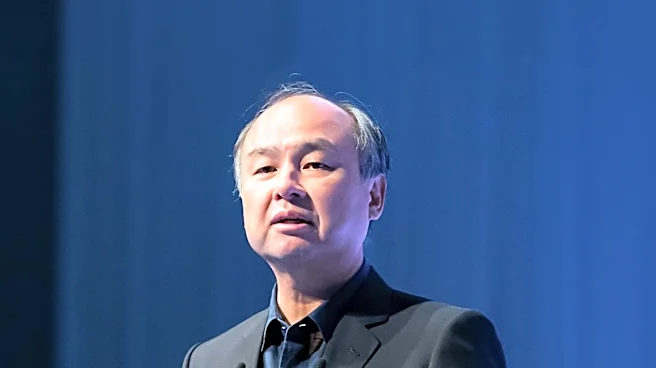
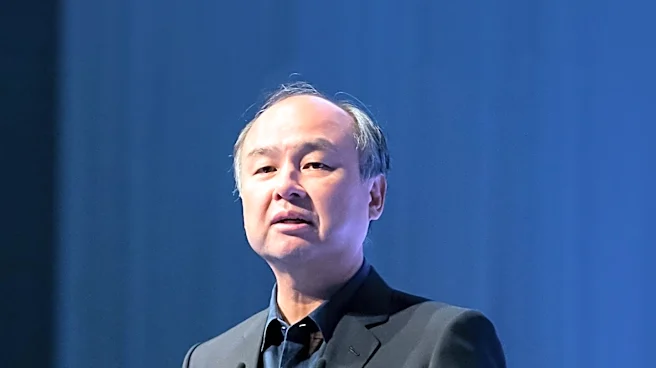
SoftBank Group reportedly explored a $1 trillion acquisition of South Korean chipmaker SK Hynix, a move aimed at gaining end-to-end control over the artificial intelligence (AI) semiconductor supply chain. According to a report in The Information, SoftBank Chairman
Masayoshi Son approached several Wall Street banks to discuss financing options for the potential deal. This proposed acquisition price would have been approximately 1.7 times SK Hynix's market capitalization of $576 billion at the time. SoftBank already holds significant stakes in other AI-related companies, including data center chip designer Ampere Computing, power infrastructure specialist SB Energy, and an 86% controlling stake in Arm Holdings, in addition to a position in AI startup OpenAI. While SoftBank confirmed it explores many opportunities, it stated that this particular deal is "no longer under active consideration," suggesting that discussions did take place.
Why It's Important?
This reported exploration highlights the intense competition and strategic maneuvering within the global AI semiconductor market. SoftBank's ambition to control the entire AI semiconductor supply chain, from design to manufacturing and power infrastructure, underscores the critical importance of these components for future technological dominance. A potential acquisition of SK Hynix, a major producer of DRAM, NAND flash, and high-bandwidth memory (HBM), would have significantly bolstered SoftBank's position in this crucial sector. The sheer magnitude of the proposed $1 trillion offer, and the potential national security implications given SK Hynix's role as Korea's dominant HBM maker, likely presented significant regulatory hurdles and investor concerns. Such a deal could have reshaped the global semiconductor landscape, impacting U.S. technology companies reliant on these components and potentially influencing international trade relations and technological competition.
What's Next?
Although SoftBank has stated that the acquisition of SK Hynix is no longer under active consideration, the underlying strategic motivations remain. SoftBank is expected to continue pursuing its goal of achieving end-to-end control over the AI semiconductor supply chain through other means, which could involve further investments, partnerships, or acquisitions in related sectors. The focus on AI and its foundational hardware components will likely intensify, leading to continued consolidation and strategic alliances within the technology industry. Regulatory bodies globally, including those in the U.S., will likely maintain close scrutiny over large-scale technology mergers and acquisitions, particularly those involving critical infrastructure and national security implications, to prevent monopolies and ensure fair competition.
Beyond the Headlines
The reported $1 trillion valuation for SK Hynix, even if not pursued, reflects the perceived immense value and future growth potential of companies at the forefront of AI hardware development. This valuation also brings into focus the broader economic implications of the AI boom, where foundational technologies are commanding unprecedented prices. The national security implications of controlling key semiconductor manufacturing capabilities are a growing concern for governments worldwide, including the U.S., as these components are vital for defense, communication, and economic competitiveness. The pursuit of vertical integration by tech conglomerates like SoftBank could lead to a more concentrated and potentially less competitive market, raising questions about innovation, pricing, and access for smaller players in the AI ecosystem. This trend could also accelerate the ongoing debate about the role of government intervention in strategic industries.