





What's Happening?
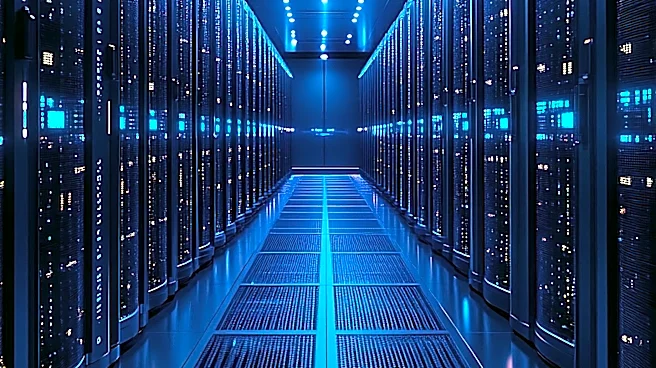
Leading U.S. specialty contractors, including Comfort Systems USA, EMCOR Group, and MYR Group, reported record quarterly revenues and backlogs in Q3 2026. This strong performance is attributed to sustained investment in AI infrastructure, data centers,
electrical grid modernization, and complex commercial and industrial construction. Comfort Systems USA saw a 54% year-over-year revenue increase to $3.77 billion, with a record backlog of $17.81 billion. EMCOR Group's revenue rose 29% to $5.54 billion, and its remaining performance obligations reached $18.57 billion, with data center projects accounting for $8.74 billion. MYR Group reported a 32% increase in revenue to $1.26 billion and a record backlog of $3.68 billion, driven by both Transmission & Distribution (T&D) and Commercial & Industrial (C&I) segments. Acquisitions, such as MYR Group's purchase of Valley Electric and Comet Electric, also contributed to growth and expanded geographic reach.
Why It's Important?
The robust earnings of specialty contractors underscore significant investment trends shaping the U.S. economy. The surge in demand for AI infrastructure and data centers highlights the rapid digital transformation across industries, creating substantial opportunities for specialized construction services. Simultaneously, ongoing electrical grid modernization efforts are critical for enhancing national energy security and reliability, especially with the increasing integration of renewable energy sources. This sustained investment indicates a long-term commitment to upgrading foundational infrastructure, which is vital for economic growth and technological advancement. The strong backlogs reported by these companies provide a clear outlook for continued activity into 2027 and beyond, signaling a healthy and expanding market for specialized contracting services, benefiting both the companies and the broader U.S. construction sector.
What's Next?
Management teams anticipate continued momentum into 2027, supported by robust project pipelines and long-term infrastructure investment. The favorable long-term fundamentals of the facility services and specialty contracting sector are expected to persist, driven by ongoing demand for data centers, AI infrastructure, electrical grid modernization, and institutional facilities. While the industry appears well-positioned for continued growth, potential shifts in economic conditions and future policy decisions could influence the pace of investment and project development. For business owners, investors, and strategic acquirers, these results emphasize the importance of technical capabilities, operational excellence, and disciplined expansion in a competitive market. Companies are likely to continue strategic acquisitions to expand capabilities and geographic reach.