







What's Happening?
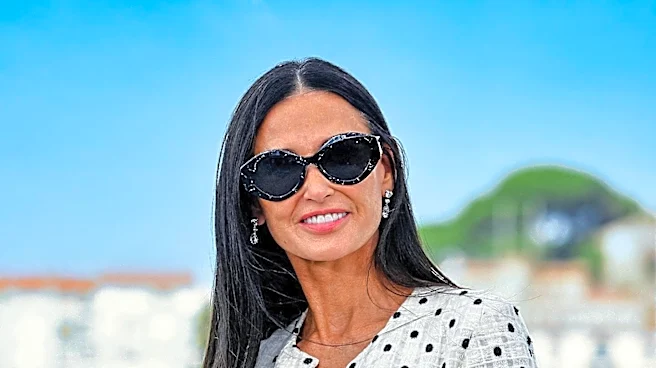
Actress Demi Moore, at 63, has shared insights into her daily wellness routine, which prioritizes emotional health and personal relationships over traditional anti-aging methods. In an interview with Harper's Bazaar Arabia, Moore detailed a practice she
maintains with a close group of friends. This routine involves daily sharing of three elements: three reasons for gratitude, three fears or challenges they are currently facing, and one personal affirmation. Moore advocates for this habit as a crucial exercise in vulnerability and unfiltered acceptance, which she believes strengthens both emotional bonds and self-awareness as part of the natural aging process. She views healthy longevity not merely as accumulating years or resisting physical changes, but as focusing on quality of life and emotional well-being, with personal connections playing a fundamental role.
Why It's Important?
This revelation from a prominent figure like Demi Moore highlights a growing shift in societal perceptions of aging and well-being, particularly within the U.S. and global entertainment industry. Her emphasis on emotional health and interpersonal relationships as key components of longevity challenges the often-prevalent narrative that focuses solely on physical appearance and youth preservation. This perspective can influence public discourse, encouraging individuals to adopt more holistic approaches to health that include mental and emotional well-being. For the wellness industry, it could signal a move towards services and products that support emotional connection and self-reflection, potentially impacting market trends. Furthermore, it underscores the importance of social support networks, a factor increasingly recognized in health studies, offering a relatable model for how individuals can foster resilience and contentment through shared vulnerability.
What's Next?
The public sharing of Demi Moore's wellness routine could inspire a broader conversation about aging gracefully and the role of emotional intelligence in personal health. It may lead to increased interest in group-based wellness practices and journaling, as individuals seek to emulate the benefits of shared vulnerability and gratitude. For the entertainment industry, it could encourage more celebrities to speak openly about their personal well-being strategies, further normalizing discussions around mental and emotional health. This trend might also influence content creation, with a potential rise in media focusing on authentic aging experiences and the power of community. Additionally, wellness brands might leverage such endorsements to promote products and services that align with emotional and relational well-being, moving beyond purely physical health metrics.
Beyond the Headlines
Demi Moore's approach to aging transcends typical celebrity narratives by focusing on internal well-being rather than external perfection. This perspective challenges the often-unrealistic beauty standards perpetuated by Hollywood and media, which can have significant psychological impacts on individuals, particularly women. By openly discussing her routine, Moore contributes to a cultural shift that values authenticity and emotional resilience over superficial appearances. This could foster a more compassionate societal view of aging, encouraging self-acceptance and reducing the pressure to conform to youth-centric ideals. Ethically, it promotes a healthier dialogue around self-care, suggesting that true well-being is cultivated through meaningful connections and self-reflection, rather than solely through cosmetic interventions or strict physical regimens. This deeper implication lies in redefining what it means to age successfully in a society often obsessed with youth.