










What's Happening?
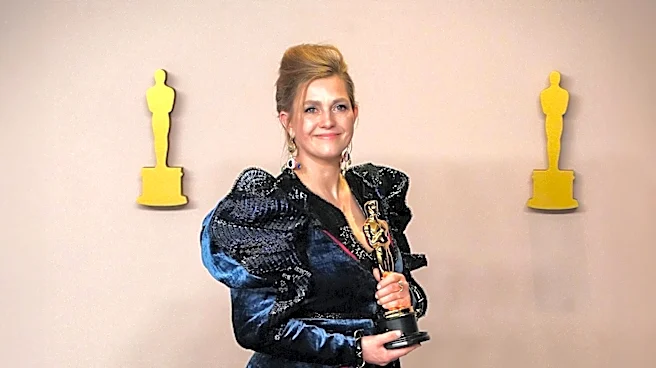
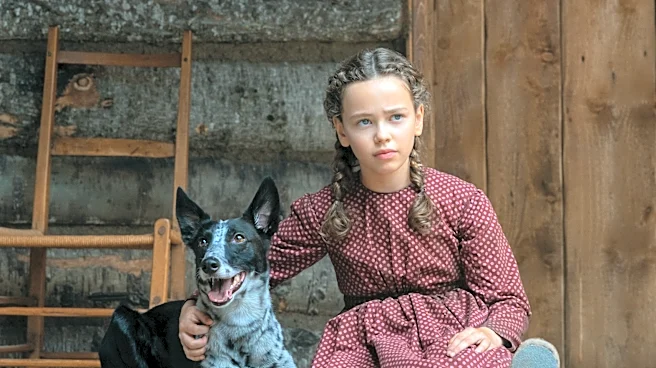
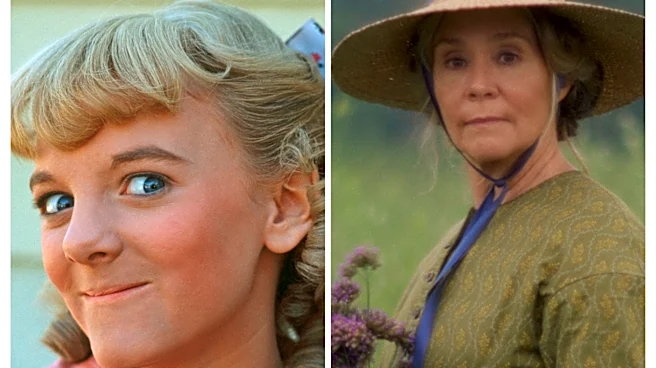
Mitchell Travers, the costume designer for the new Netflix adaptation of 'Little House on the Prairie,' has focused on creating an authentic visual representation of the 19th-century American West. Travers, who revisited the original books by Laura Ingalls
Wilder, aimed to capture the world through the eyes of a child, emphasizing the expansive and nostalgic qualities of the narrative. A significant aspect of the production involved collaborating with the Osage community to authentically depict their culture and clothing from the late 1860s. This collaboration resulted in the creation of 3,200 native-made pieces, with 1,127 handmade by Osage artisans. The costumes were crafted using traditional techniques, reflecting the cultural exchanges and materials available during that era.
Why It's Important?
The adaptation of 'Little House on the Prairie' highlights the importance of cultural representation and historical accuracy in media. By involving Osage artisans, the production not only ensures authenticity but also provides a platform for showcasing indigenous craftsmanship and cultural heritage. This approach challenges the often monolithic portrayal of Native American cultures in entertainment, offering a more nuanced and diverse representation. The project underscores the value of collaboration between filmmakers and indigenous communities, promoting cultural preservation and appreciation. Additionally, the series serves as a reminder of the educational potential of media, encouraging viewers to engage with historical narratives and diverse cultural perspectives.
What's Next?
As the series progresses, it is likely to continue exploring the complexities of cultural interactions and historical narratives. The involvement of Osage artisans sets a precedent for future productions to prioritize authenticity and collaboration with indigenous communities. The series may inspire other filmmakers to adopt similar approaches, fostering a more inclusive and accurate portrayal of history in media. Additionally, the success of the adaptation could lead to increased interest in the original 'Little House on the Prairie' books, potentially sparking discussions about their historical context and cultural significance.
Beyond the Headlines
The collaboration with the Osage community not only enriches the visual storytelling of 'Little House on the Prairie' but also contributes to broader conversations about cultural representation and appropriation in the entertainment industry. By prioritizing authenticity and respecting indigenous craftsmanship, the production challenges traditional power dynamics and promotes a more equitable approach to storytelling. This initiative may encourage other productions to engage with cultural consultants and artisans, fostering a more inclusive and respectful media landscape. Furthermore, the series highlights the potential for media to serve as a tool for cultural education and preservation, encouraging audiences to explore and appreciate diverse cultural narratives.