




What's Happening?
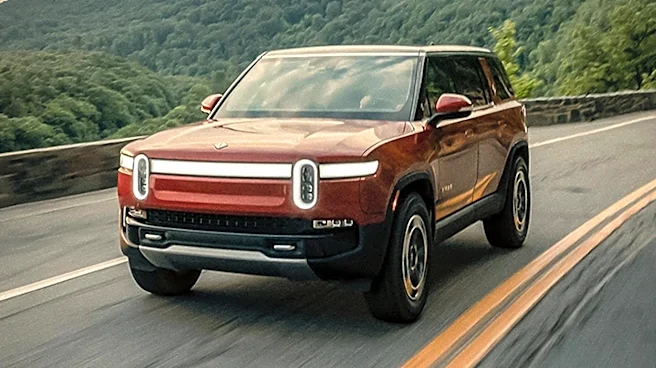
Rivian has introduced its R2 midsize electric SUV, a crucial model for the company as it seeks to achieve profitability. The R2 is designed to be more cost-effective and scalable compared to its predecessors, the R1S and R1T, which were praised but financially
unsustainable due to their high price points. The R2 is positioned to compete directly with the Tesla Model Y, with a starting price of $45,000 for the base model, and $61,000 for the test-car trim. The vehicle features a familiar design with a cube-like, squared-off appearance, and a premium interior with high-resolution screens and quality materials. The R2's performance model boasts dual motors with 656 horsepower, achieving 0-to-60 mph in 3.6 seconds.
Why It's Important?
The launch of the R2 is pivotal for Rivian as it attempts to transition from a niche player to a mass-market competitor in the electric vehicle sector. By offering a more affordable and scalable product, Rivian aims to increase its market share and improve its financial standing. The R2's competitive pricing and features could attract a broader customer base, challenging established players like Tesla. Success with the R2 could solidify Rivian's position in the EV market and potentially lead to increased investor confidence and stock performance. The move also reflects broader industry trends towards more affordable electric vehicles, which are crucial for widespread adoption and the transition to sustainable transportation.
What's Next?
Rivian's next steps will likely involve ramping up production to meet anticipated demand for the R2. The company will need to ensure efficient manufacturing processes to maintain the competitive pricing of the R2 while achieving profitability. Market reception and sales performance will be closely watched by investors and industry analysts. Rivian may also explore expanding its product lineup or entering new markets to further capitalize on the momentum generated by the R2. Additionally, the company will need to navigate supply chain challenges and potential regulatory changes in the EV sector.