
What's Happening?
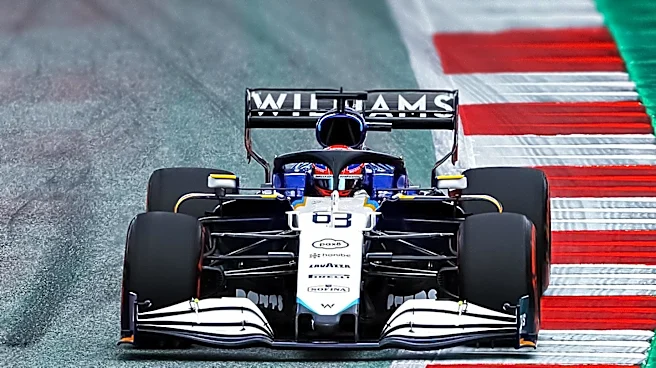
Williams Racing has experienced a significant downturn in performance during the 2026 Formula 1 season, failing to score any championship points in the last five Grands Prix. This marks a continuous decline for the team, which initially secured seven
points in the first five races, followed by four, then one, and finally zero in the most recent five-race period. Drivers Carlos Sainz and Alexander Albon have both struggled to convert race weekends into points, with Sainz scoring six of the team's initial seven points and Albon contributing four points in the second five-race period. The team currently sits ninth in the constructors' championship with a total of 12 points after 20 Grands Prix, ahead of only Aston Martin and Cadillac. This trend is particularly concerning as it affects both drivers, indicating a fundamental issue with the car's competitiveness rather than individual performance.
Why It's Important?
The sustained decline of Williams Racing carries significant implications for the team's future and its standing within Formula 1. The inability to score points in consecutive races, despite having an experienced driver lineup in Carlos Sainz and Alexander Albon, highlights a critical lack of car performance. This situation raises questions about the effectiveness of the team's development program and its ability to compete with midfield rivals, many of whom have shown improvement. The team's struggles could impact its financial stability, sponsorship appeal, and its capacity to attract top talent in the long term. For the drivers, the lack of competitive machinery can hinder their careers and marketability, as consistent strong performances are essential in Formula 1. The current trajectory suggests that Williams is falling behind, making it harder to close the gap to other teams and potentially jeopardizing its position in the sport.
What's Next?
Williams Racing has three remaining opportunities in Las Vegas, Qatar, and Abu Dhabi to break its points drought before the 2027 season. The team's principal, James Vowles, has acknowledged the car's lack of speed, and the team is reportedly using the latter part of the 2026 season for extensive testing and data collection for the 2027 car. Drivers Carlos Sainz and Alexander Albon have been engaged in experimental setups during practice sessions, effectively acting as 'test drivers' to gather crucial correlation data for future development. While this strategy aims to improve the car for the next season, it means sacrificing current race performance. The team's focus on 2027 development, including addressing issues like car weight and aerodynamic concepts, will be critical. The success of this strategy will determine whether Williams can reverse its alarming decline and return to a more competitive position in the upcoming seasons.
Beyond the Headlines
The current situation at Williams Racing underscores a broader challenge faced by smaller teams in Formula 1: balancing immediate competitive demands with long-term development. The decision to effectively use current race weekends as test sessions for the 2027 car, as confirmed by drivers like Carlos Sainz, highlights the immense pressure to innovate and improve within the sport's strict regulations and budget caps. This approach, while potentially beneficial for future seasons, raises ethical considerations regarding the competitive integrity of the current championship, as the team is not fully optimizing for present results. It also reflects the high-stakes nature of Formula 1, where even established teams can face existential threats if they fail to adapt. The long-term implications could include a further stratification of the grid, with top teams dominating and smaller teams struggling to remain relevant, potentially impacting the sport's overall appeal and competitive balance.