




What's Happening?
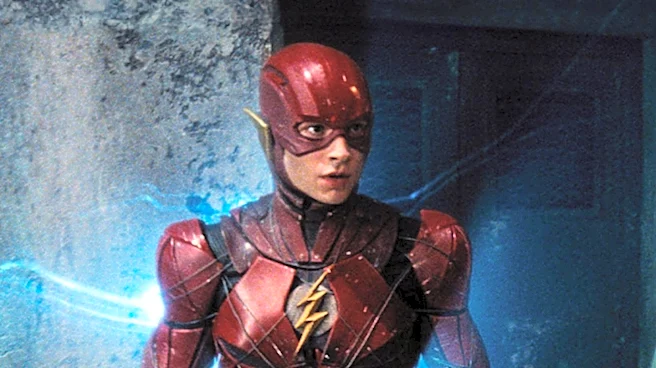
Ezra Miller, who portrayed Barry Allen in the now-defunct DC Extended Universe (DCEU), provided a brief and humorous response when asked about a potential sequel to 'The Flash' film. During an interaction with a fan in Venice, Miller simply replied, 'God
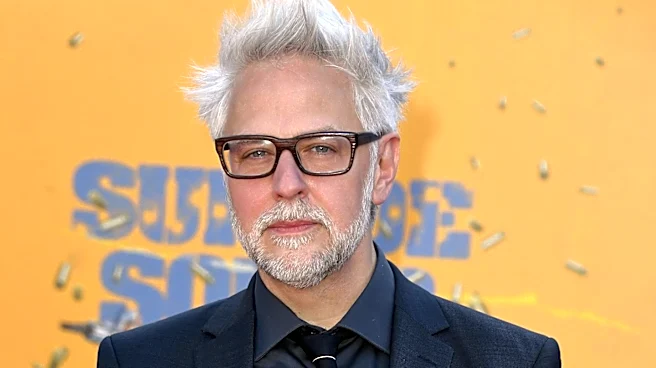
only knows,' accompanied by a chuckle, and offered no further comments on the possibility of another 'Flash' project. 'The Flash,' released in 2023, received mixed reviews and struggled at the box office, grossing just over $271 million worldwide. The film's production was notably troubled, experiencing delays and facing challenges due to Miller's legal controversies. This, combined with the ongoing reboot of the DCEU by James Gunn and Peter Safran, suggests that 'The Flash' will likely be Miller's sole solo film as the superhero. Miller had previously appeared as the character in 'Batman v. Superman' (2016) and 'Justice League,' and also made a cameo in the CW's 'Crisis on Infinite Earths' crossover and 'Zack Snyder’s Justice League,' totaling seven appearances.
Why It's Important?
The non-committal response from Ezra Miller regarding a 'Flash' sequel highlights the significant shifts occurring within the DC cinematic universe and the broader entertainment industry. The film's underperformance at the box office, coupled with its mixed critical reception, underscores the financial risks associated with major superhero franchises, especially when production is plagued by delays and controversies involving lead actors. This situation impacts Warner Bros. Discovery's strategy for its DC properties, as the company is actively rebooting the DCEU into the new DCU under James Gunn and Peter Safran. The decision to move away from previous iterations, including Miller's 'Flash,' reflects a strategic pivot to establish a more cohesive and successful cinematic universe. For actors, it emphasizes the increasing scrutiny and potential career implications of personal conduct, particularly for those headlining tentpole productions. The financial and critical outcomes of 'The Flash' serve as a case study for studios on managing complex productions and talent, influencing future casting and development decisions in high-stakes franchises.
What's Next?
Given the context, it is highly improbable that 'The Flash' will receive a direct sequel starring Ezra Miller. The film's poor box office performance and the comprehensive reboot of the DC Extended Universe into the new DCU by James Gunn and Peter Safran effectively close the door on continuations of previous storylines and character iterations. The new DCU is expected to introduce its own version of The Flash, though the timeline and casting for this new iteration remain to be seen. Andy Muschietti, the director of 'The Flash,' is slated to direct 'The Brave and the Bold,' an upcoming Batman film within the new DCU, indicating that while some creative talent may transition, the previous narrative arcs are being discontinued. The focus for DC Studios will now be on building a fresh, interconnected universe, which will involve new casting announcements and development plans for iconic characters like The Flash. This transition will likely involve a period of strategic announcements and new project launches as the DCU takes shape.
Beyond the Headlines
The situation surrounding 'The Flash' and Ezra Miller extends beyond typical box office analysis, touching upon broader industry trends and ethical considerations. The film's troubled production, marked by significant delays and Miller's legal controversies, brought to light the challenges studios face in navigating talent issues, especially when a lead actor's personal conduct impacts a major franchise. This scenario prompts deeper discussions within Hollywood about accountability, the duty of care studios have towards their productions and public image, and the evolving expectations placed on public figures. Furthermore, the comprehensive reboot of the DCEU reflects a larger trend in the entertainment industry where established franchises are being re-evaluated and re-imagined to meet changing audience demands and competitive landscapes. This constant reinvention highlights the cyclical nature of cinematic universes and the continuous search for fresh narratives and successful formulas, often at the expense of previous iterations, regardless of their initial promise or fan base.