
What's Happening?
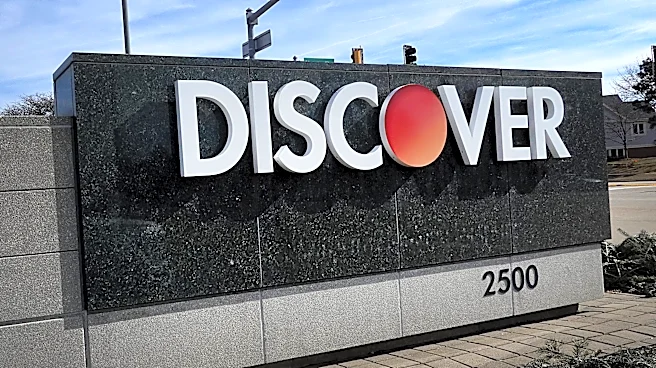
Discover Bank, a direct-to-consumer digital bank, provides a comprehensive suite of traditional banking products, including high-yield savings accounts, money market accounts, and FDIC-insured Certificates
of Deposit (CDs). In contrast, Chime operates as a financial technology company, partnering with FDIC-insured institutions like The Bancorp Bank, N.A., and Stride Bank, N.A., to offer checking accounts, high-yield savings features, and debit cards. Chime does not offer traditional CDs, focusing instead on fee-free everyday banking, automated savings round-ups, and early direct deposits. This distinction is crucial for consumers evaluating where to place their funds, especially as the macroeconomic environment influences CD yields and savings account rates. While Discover Bank offers fixed-term CDs with potential early withdrawal penalties, Chime prioritizes liquidity and automated money management without long-term investment products.
Why It's Important?
The differing approaches of Discover Bank and Chime highlight a significant shift in the U.S. banking sector, offering consumers diverse options based on their financial goals and risk tolerance. Discover Bank caters to savers seeking guaranteed returns over specific time horizons through CDs, which protect against declining interest rates but come with liquidity constraints. This is particularly relevant for conservative savers in a fluctuating interest rate environment. Chime, on the other hand, appeals to individuals prioritizing daily liquidity, automated savings, and fee-free banking, reflecting a growing demand for convenient, technology-driven financial solutions. The absence of traditional CDs from Chime's offerings means users seeking fixed-income investments must look to external institutions, influencing how consumers diversify their portfolios. This evolving landscape underscores the importance of understanding the specific features and limitations of each financial provider to make informed decisions.
What's Next?
As the financial landscape continues to evolve, consumers will likely see further innovation in both traditional and fintech banking sectors. Traditional banks like Discover may continue to enhance their digital platforms and product offerings to compete with fintech companies, while fintechs like Chime might explore new partnerships or expand their services to address a broader range of financial needs, potentially including more structured savings options. The ongoing adjustments in monetary policy will continue to influence interest rates, making the comparison between variable-yield savings accounts and fixed-yield CDs a persistent consideration for savers. Consumers will need to remain vigilant in evaluating the trade-offs between yield optimization, accessibility, and account features to align with their financial objectives.
Beyond the Headlines
The divergence between Discover Bank and Chime reflects a broader trend in the U.S. financial industry: the unbundling and re-bundling of financial services. Fintech companies are challenging traditional banking models by focusing on specific customer needs and leveraging technology for efficiency and user experience. This competition is driving innovation across the sector, pushing traditional banks to modernize their offerings and improve customer engagement. The emphasis on fee-free services and automated savings by Chime also highlights a shift towards greater financial inclusion and accessibility, particularly for those who may be underserved by traditional banking institutions. However, the lack of long-term investment products in some fintech models also raises questions about comprehensive financial planning and the need for consumers to navigate a more fragmented financial ecosystem.