




What's Happening?
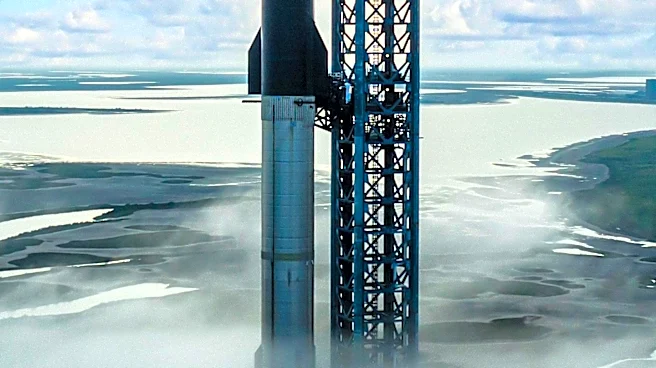
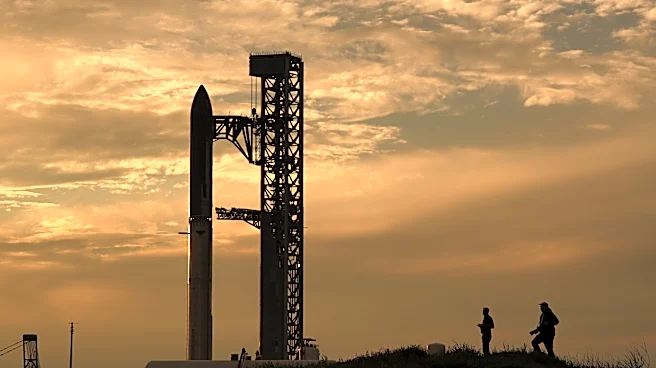
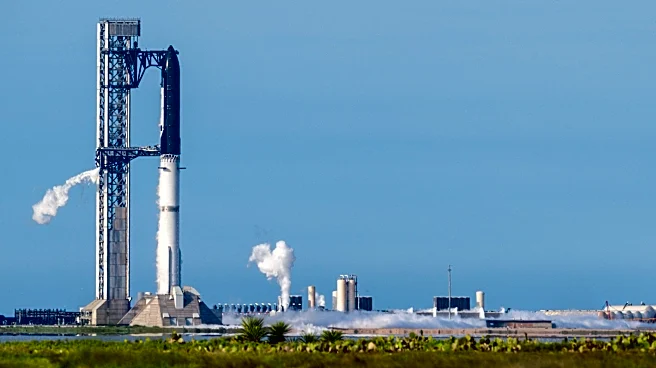
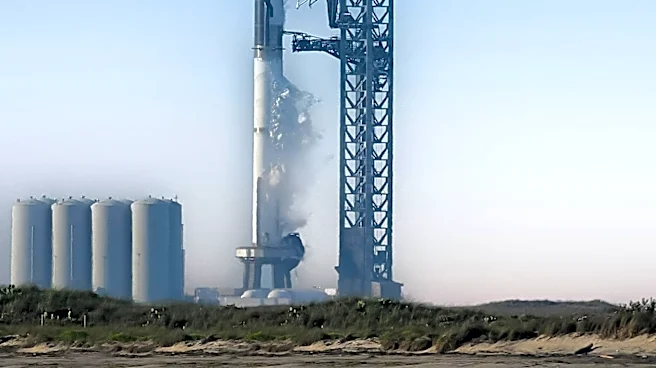
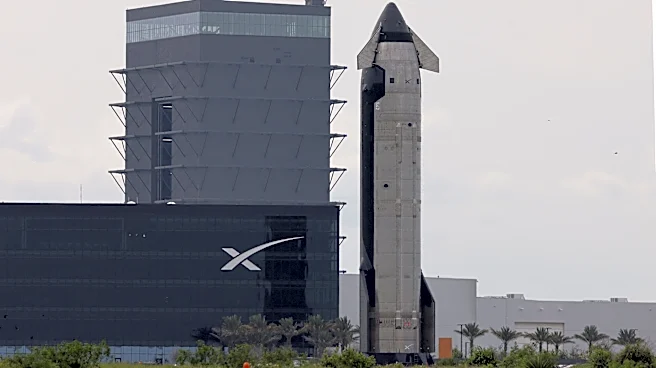
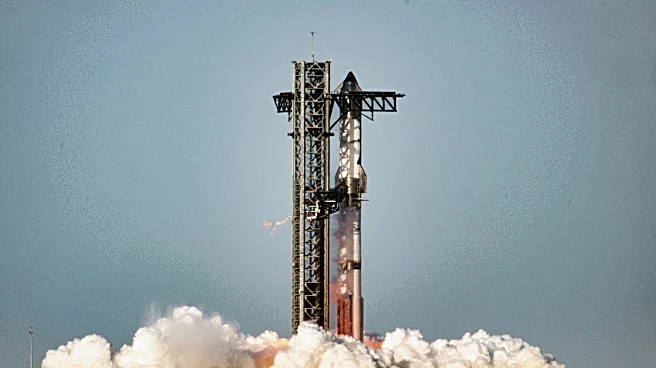
SpaceX successfully performed its first Starship tower catch of an upper stage, with Ship 42 being snatched from the sky by the 'chopsticks' arms of its launch tower at Starbase, Texas. This historic event occurred on November 14, 2026, approximately
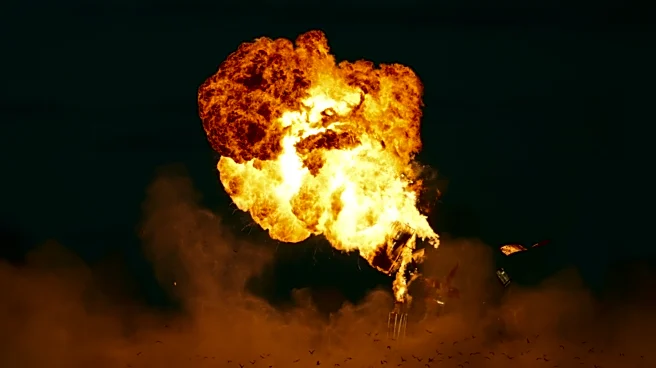
22.5 hours after liftoff. Flight 15, only Starship's second orbital mission, also deployed 26 Starlink V3 satellites. However, the Super Heavy booster did not return as planned. According to SpaceX's mission summary, the booster's boostback burn ended early due to a low fuel mass, triggering an automated abort by its guidance, navigation, and control system. The booster was diverted to an offshore landing location in the Gulf of Mexico, where its flight termination system was activated. SpaceX is currently investigating the root cause of this booster anomaly.
Why It's Important?
This first-ever Starship tower catch of an upper stage is a critical step towards achieving full reusability, which is central to SpaceX's strategy for drastically reducing launch costs and increasing launch cadence. The ability to return the spacecraft directly to the launch mount for inspection, refurbishment, and restacking is expected to transform the economics of spaceflight. This has significant implications for Starlink, SpaceX's satellite broadband business, as cheaper and more frequent Starship flights will allow for faster deployment of higher-capacity V3 satellites. Furthermore, NASA's Artemis program, which plans to use a version of Starship as its human landing system for returning astronauts to the Moon, relies heavily on Starship's reusability. This milestone demonstrates progress towards making such ambitious missions economically viable.
What's Next?
SpaceX must now investigate why the Super Heavy booster's catch was aborted and work towards achieving a 'double catch' of both stages in future missions. The company also needs to demonstrate that a caught ship can be quickly turned around and flown again without extensive rework, which is key to realizing the promised cost savings. Factors such as heat shield wear, engine reuse, and the efficiency of tower operations will determine how quickly the economics of Starship improve. While no reflight date has been set, the next flight is anticipated to attempt both catches again, providing more data on the system's performance under repeated use. This iterative process of testing and refinement is crucial for establishing Starship as a reliable and routine space transportation system.
Beyond the Headlines
The successful Starship tower catch represents a significant shift in the paradigm of space launch, moving away from disposable rockets towards a model of rapid and complete reusability. This technological leap could fundamentally alter the competitive landscape of the space industry, making space access more democratic and fostering innovation across various sectors. The 'science fiction' imagery of a rocket being caught by mechanical arms underscores the audacious vision driving SpaceX. This achievement not only validates years of research and development but also sets a new standard for what is considered possible in aerospace engineering. The long-term implications include the potential for establishing permanent human presence beyond Earth, enabling advanced scientific research, and creating new commercial opportunities in space.