







What's Happening?
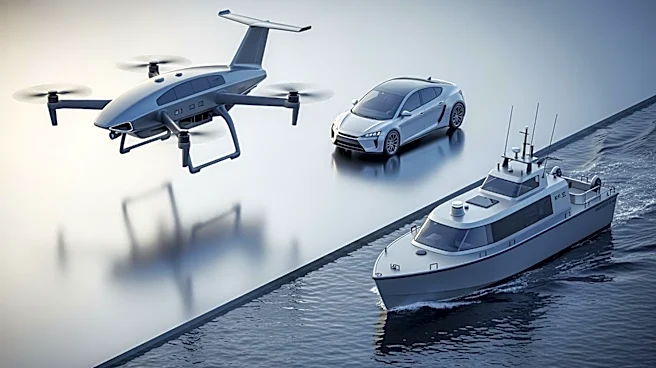
Recent developments in autonomous technology have marked significant milestones across various transportation sectors. AIR, a smart aircraft manufacturer, completed the first flight of its Production AIR Cargo-Heavy Lift UAS, a VTOL-capable unmanned platform
designed for logistics missions. Bot Auto achieved a fully autonomous 230-mile truckload delivery in Texas, marking a milestone in over-the-road commercial transport without human intervention. Additionally, Orca AI's navigation technology was successfully tested in a live vessel trial, demonstrating high precision and recall in object detection. These advancements highlight the growing capabilities and reliability of autonomous systems in real-world applications.
Why It's Important?
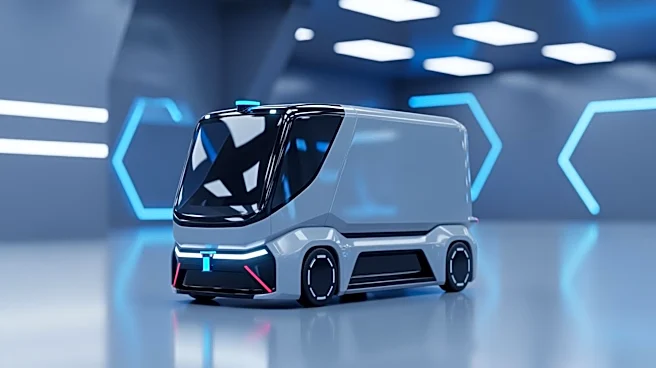
The progress in autonomous technology is crucial for the future of logistics and transportation, promising increased efficiency, reduced costs, and enhanced safety. The successful trials by AIR, Bot Auto, and Orca AI demonstrate the potential for autonomous systems to revolutionize supply chain operations by minimizing human intervention and optimizing resource utilization. These advancements could lead to significant economic benefits, including lower operational costs and improved delivery times. Moreover, the adoption of autonomous technology could enhance safety by reducing human error, a leading cause of accidents in transportation.
What's Next?
As autonomous technology continues to evolve, further testing and regulatory approvals will be necessary to ensure safety and reliability. Companies involved in these advancements will likely focus on scaling their operations and integrating autonomous systems into broader logistics networks. Regulatory bodies will play a critical role in establishing guidelines and standards to facilitate the safe deployment of these technologies. Stakeholders, including logistics companies, technology developers, and policymakers, will need to collaborate to address challenges such as cybersecurity, data privacy, and public acceptance.