



What's Happening?
Scout Motors, a manufacturer of electric trucks and rugged SUVs, has reaffirmed its commitment to establishing a seven-location retail network in Canada by 2033. This plan comes despite ongoing U.S. vehicle tariffs that complicate operations for car companies
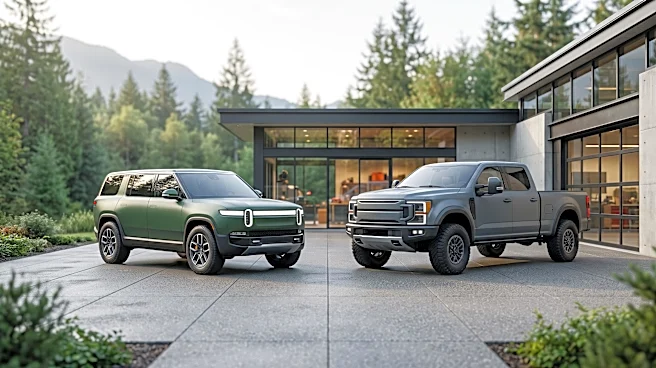
without Canadian production. The company, a subsidiary of Volkswagen Group, outlined these updated retail details in early November near Chicago. The network will include three outlets in Toronto, two in Montreal, and one each in Vancouver and Ottawa. Scout refers to these sales and service locations as 'workshops.' While production of its Traveler SUV and Terra pickup is slated to begin in South Carolina in 2028, Canadian pricing and a specific sales launch date have not yet been announced. The company is currently accepting refundable reservations from customers for $150, with U.S. pricing for both vehicles expected to start below US$60,000.
Why It's Important?
This development is significant for the North American automotive market, particularly concerning the impact of trade tariffs on electric vehicle (EV) adoption and cross-border business strategies. Canada's 25% tariff on U.S.-made vehicles, implemented in April 2025 in response to similar U.S. duties, poses a challenge for companies like Scout Motors that lack Canadian manufacturing facilities. While some automakers have adjusted their sourcing or raised prices due to these duties, Scout's firm commitment to a Canadian retail presence suggests a long-term strategic play. The potential for Canadian-made components, such as batteries from Volkswagen Group's PowerCo plant in St. Thomas, Ontario, could offer some relief from import duties, potentially influencing the final pricing for Canadian consumers. This situation highlights the complex interplay between international trade policies and the expansion plans of EV manufacturers.
What's Next?
The immediate future for Scout Motors in Canada hinges on several factors. Trade discussions between Ottawa and Washington are ongoing, and any changes to automotive duties could significantly impact Scout's launch strategy and pricing. The company's Canadian retail commitment is currently more concrete than its launch schedule or pricing, indicating that these elements are subject to the evolving trade landscape. Furthermore, Scout's product strategy has evolved to include an extended-range electric option with an onboard generator, which currently accounts for 85% of customer preorders. This suggests a flexible approach to meeting consumer demand and potentially mitigating range anxiety, which could be crucial for market acceptance in Canada. The start of production in South Carolina in 2028 will be a key milestone, followed by the gradual establishment of its Canadian retail network by 2033.
Beyond the Headlines
The situation with Scout Motors and Canadian tariffs underscores a broader trend of economic nationalism and its implications for global supply chains and consumer markets. The tit-for-tat tariff imposition between the U.S. and Canada creates an uncertain environment for businesses, potentially leading to higher costs for consumers or altered investment decisions. For the EV sector, this could mean a slower rollout of new models or a preference for vehicles manufactured within tariff-free zones. The strategic decision by Scout to proceed with a Canadian retail network despite these hurdles suggests a belief in the long-term viability of the Canadian EV market and a willingness to navigate complex trade environments. This scenario could also encourage more localized manufacturing or component sourcing to circumvent tariffs, influencing future automotive industry investments across North America.