






What's Happening?
Airport Dimensions has rebranded its airport sleep product from 'sleep 'n fly' to 'Sleepover,' establishing a new category for airport sleep stations. This evolution is a direct response to the changing needs of modern travelers who increasingly seek
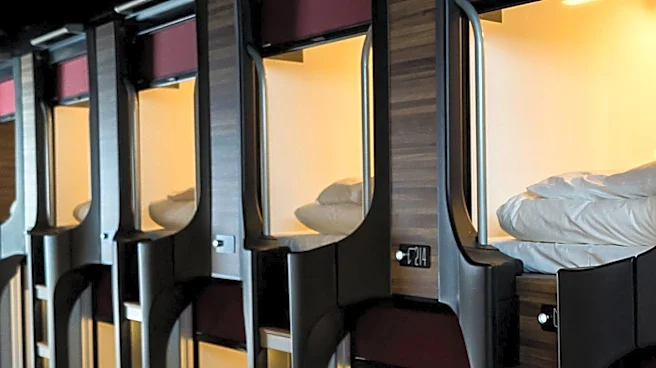
privacy and rest within airport terminals. The company emphasizes that Sleepover provides travelers with a calm, safe, and comfortable space, offering modular pods and cabins with optional add-ons like showers. According to Airport Dimensions' AX25 research, 49% of passengers are actively interested in sleep facilities at airports, and 95% of airport executives acknowledge that current terminal space is often underutilized. The Sleepover concept aims to activate these underutilized spaces, complementing existing lounges by offering a purpose-built solution for rest between or before flights. This move reflects a broader trend in the airport industry to enhance passenger well-being and diversify non-aeronautical revenue streams.
Why It's Important?
The rebranding of Airport Dimensions' sleep product to 'Sleepover' signifies a significant shift in the airport industry's approach to passenger experience and terminal utilization. The growing demand for in-terminal rest solutions, as highlighted by the company's research, indicates that travelers prioritize comfort and privacy during layovers or delays. This trend presents a substantial opportunity for airports to improve customer satisfaction and generate new revenue. By offering dedicated sleep facilities, airports can cater to a diverse range of travelers, from business professionals seeking productivity to leisure passengers valuing comfort. The market for airport sleep pods was valued at $131.17 million in 2025 and is projected to reach $269.7 million by 2032, demonstrating the economic importance of this segment. This development also underscores a broader industry recognition that traveler well-being is becoming a standard part of airport infrastructure, alongside traditional amenities like lounges and dining.
What's Next?
The 'Sleepover' brand is expected to expand its presence in airports globally, with Airport Dimensions actively seeking new partners. The company believes that on-demand rest solutions will play an increasingly important role in creating more comfortable and enjoyable human-centered travel environments. Other key players in the airport sleep market, such as Napcabs and GoSleep, are also pursuing international expansion, indicating a competitive and growing sector. Airports like Munich and Amsterdam Schiphol, which were early adopters of micro-accommodation, continue to expand their offerings, with Munich Airport planning additional napcabs for 2026 due to high demand. Singapore Changi Airport, while not currently featuring sleep pods, offers snooze lounges and transit hotels, with a new Hotel Indigo under construction, set to open in 2028. These developments suggest a continued investment in diverse sleep and rest options to meet evolving passenger expectations.
Beyond the Headlines
The rise of dedicated sleep facilities like 'Sleepover' reflects a deeper cultural shift in how travel is perceived and experienced. Modern travelers are increasingly viewing airports not just as transit points but as spaces where well-being and personal comfort are paramount. This trend challenges the traditional model of airport design and service, pushing for more flexible and personalized amenities. The emphasis on privacy, quiet, and the ability to recharge highlights a growing awareness of the physical and mental toll of travel. Furthermore, the integration of advanced features like adjustable lighting, climate control, and ergonomic sleeping surfaces in these pods points to a future where technology and design converge to optimize the travel experience. This evolution could lead to a re-evaluation of airport real estate, with underutilized areas being transformed into high-yield facilities that cater to the holistic needs of passengers.