





What's Happening?
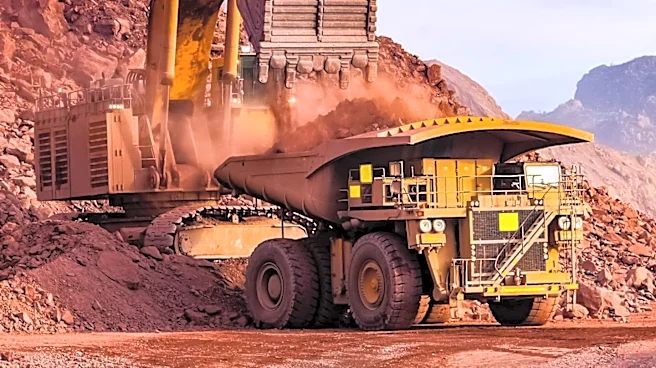
United States Antimony Corporation (USAC), an American mining company, has requested $36 million from the U.S. government to develop infrastructure, logistics, and critical mineral supply chains along the Chad-Cameroon corridor. The total proposed project
budget is $45 million, with USAC expecting Washington to cover 80% of the costs if approved. The request was disclosed by Jonathan Miller, USAC's vice president of investor relations and international sales, during the company's third-quarter earnings presentation on November 12, 2026. USAC submitted its proposal to the State Department in September 2026 under the U.S.-Africa Strategic Investment Program, an initiative designed to facilitate American investment in Africa's critical minerals sector. However, the company has provided limited details about the specific infrastructure to be developed or the implementation schedule.
Why It's Important?
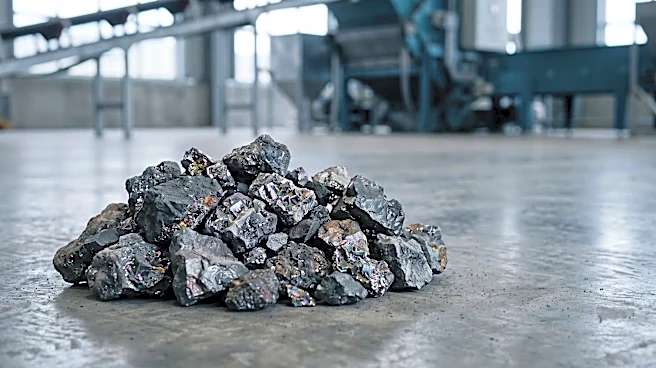
This funding request by USAC highlights the U.S. government's strategic interest in securing critical mineral supply chains from Africa, aligning with broader national security and economic objectives. Antimony is a critical mineral used in various industrial applications, including defense, electronics, and renewable energy. Diversifying sources and ensuring stable supply chains for such minerals is crucial for U.S. industries to reduce reliance on potentially volatile regions or monopolistic suppliers. If approved, this investment could strengthen U.S. influence in the African mining sector and contribute to the development of infrastructure in Chad and Cameroon, potentially creating economic opportunities and fostering trade relationships. However, the lack of detailed project plans raises questions about the specific benefits and risks involved.
What's Next?
The U.S. State Department's U.S.-Africa Strategic Investment Program, under which USAC applied, has a proposed funding envelope of $500 million, with individual awards ranging from $5 million to $50 million. While USAC's application falls within these parameters, the company has not reported any progress on its Chad-Cameroon proposal, unlike other applications for tungsten projects in the U.S. Furthermore, the State Department announced on November 13 that the program was closed to new applications, leaving the status of USAC's September proposal unclear. The company has not specified the source for the remaining $9 million of the project's budget. Until the U.S. government decides on the funding application and USAC provides more details, the Chad-Cameroon initiative remains a proposal.
Beyond the Headlines
The pursuit of critical mineral corridors in Africa by U.S. companies like USAC reflects a broader geopolitical strategy to counter the dominance of other global powers in the critical minerals market. This initiative could lead to increased U.S. engagement in African infrastructure development, potentially fostering economic growth but also raising concerns about resource extraction and environmental impact. The U.S.-Africa Strategic Investment Program aims to promote American private investment, which could reshape economic landscapes in recipient countries. However, the success and ethical implications of such projects depend heavily on transparency, local community engagement, and adherence to environmental and labor standards. The long-term implications involve not just mineral supply but also the nature of U.S.-Africa economic partnerships and regional stability.