







What's Happening?
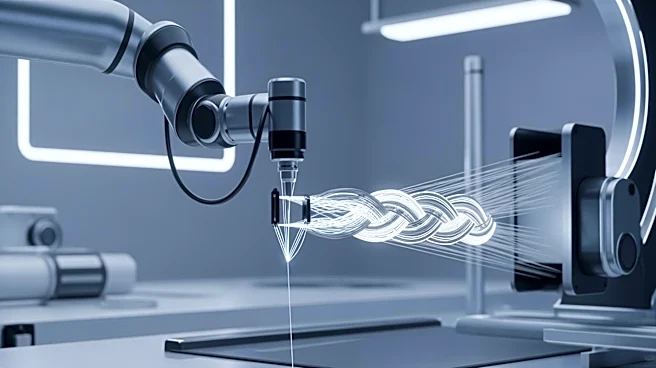
HaloBraid, a robotics startup founded by Yinka Ogunbiyi, has raised $7 million in a seed funding round led by Alexis Ohanian's venture firm, Seven Seven Six. The company aims to transform the traditional hair braiding process, which can take up to 12
hours, by introducing a device that acts as a braiding assistant for professional stylists. This device allows stylists to start the braiding process and then hand it off to HaloBraid, which completes the braid in seconds. The innovation is designed to be gentle on hair and can handle both knotless and box braids. The funding will be used for product development, manufacturing, and securing salon partnerships.
Why It's Important?
The introduction of HaloBraid's device could significantly impact the hair care industry, particularly for Black women who often spend long hours in salons for braiding. By reducing the time required for braiding, the device could increase the frequency with which individuals choose to have their hair braided, potentially boosting salon revenues. Additionally, it addresses health concerns for stylists, such as carpal tunnel syndrome and arthritis, by reducing the physical demands of braiding. The investment by Alexis Ohanian highlights the market potential for innovations in textured hair care, a sector that has been largely overlooked despite a strong consumer base.
What's Next?
HaloBraid plans to launch its device later this year and is already considering the development of additional products, such as a device to undo braids. The company will focus on expanding its market presence by forming partnerships with salons and continuing product development. As the device enters the market, it may face competition from other emerging technologies in the hair care industry, but its unique approach and backing from prominent investors position it well for success.
Beyond the Headlines
The development of HaloBraid's device represents a broader trend of integrating technology into personal care routines, particularly in areas that have traditionally relied on manual labor. This shift could lead to more innovations in the beauty industry, making personal care more efficient and accessible. Additionally, the focus on textured hair care highlights a growing recognition of the diverse needs of consumers and the potential for technology to address these needs in culturally sensitive ways.