







What's Happening?
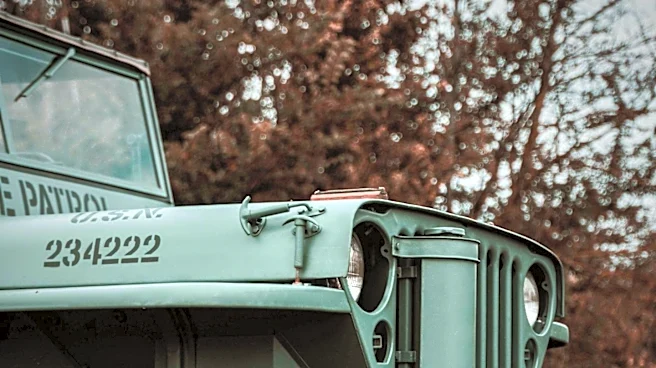
Praesidus, an American brand established in 2019, has launched a new military field watch that incorporates steel from the hood of a World War II Willys MB Jeep. This initiative is part of the brand's focus on recreating the iconic A-11 hacking field watch,
known as 'the watch that won the war.' The company recovered steel from a war-used Willys MB, the original Jeep 4x4 utilized by American GIs during WWII, and repurposed it to create the watch dials. Instead of refining the material, Praesidus chose to preserve the steel's 'war-ravaged state,' applying a blasting process to reveal different levels of wear. This process results in five distinct colorways for the dials: Dark Steel, OG Green, Fresh Green, Red Patina, and Yellow Patina. The watches are designed to offer a modernized take on the historic A-11 model.
Why It's Important?
This release is significant for collectors and enthusiasts of military history and horology, as it offers a tangible connection to World War II. By integrating actual historical artifacts into contemporary products, Praesidus creates a unique value proposition that goes beyond mere aesthetics. The decision to maintain the 'war-ravaged' appearance of the dials emphasizes authenticity and historical narrative, appealing to consumers who value provenance and a story behind their purchases. This approach could also set a precedent for other brands looking to incorporate historical elements into their products, potentially fostering a niche market for 'artifact-integrated' goods. For the U.S. market, it taps into a sense of national pride and historical remembrance associated with WWII, offering a commemorative item that is both functional and symbolic.
What's Next?
The success of Praesidus's new military field watch could influence future product development within the brand and potentially inspire other manufacturers. If this model garners significant interest, Praesidus might explore incorporating other historical materials into future watch designs or expanding the range of WWII-era artifacts used. The brand could also face increased demand for limited-edition runs or custom pieces, further solidifying its position in the niche market of historically inspired timepieces. Additionally, the unique manufacturing process and the story behind the materials could become a key marketing strategy, attracting a broader audience interested in unique, story-driven products.
Beyond the Headlines
The integration of historical artifacts into consumer goods raises interesting questions about preservation, authenticity, and the commercialization of history. While Praesidus's approach offers a unique way to connect with the past, it also highlights the finite nature of such materials. The ethical considerations of sourcing and utilizing historical remnants, particularly those from significant global conflicts, could become a point of discussion. Furthermore, this trend could encourage a deeper appreciation for the stories embedded within objects, transforming them from mere commodities into tangible pieces of history. It also underscores a growing consumer desire for products with genuine narratives and a sense of heritage, moving beyond mass-produced items to those with unique, verifiable origins.