





What's Happening?
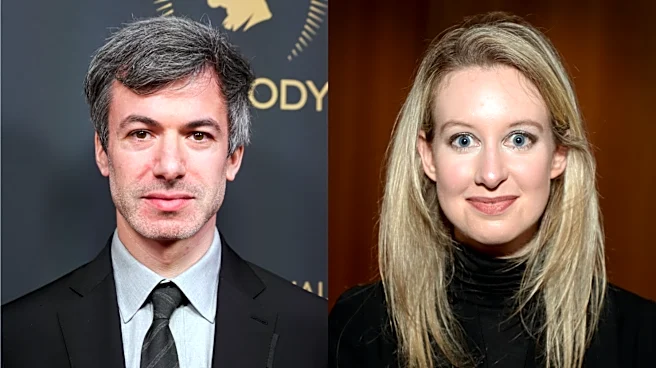
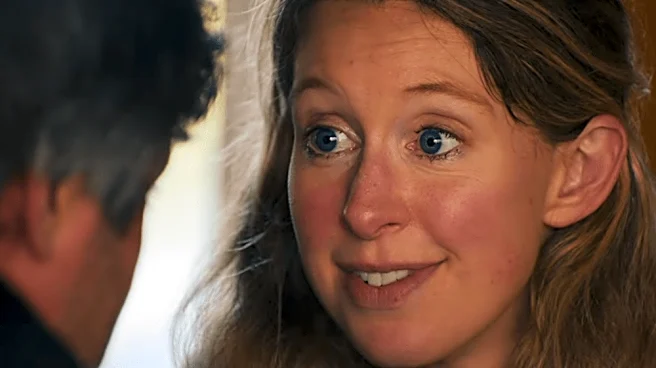
Nathan Fielder has directed a three-hour documentary titled 'You Can See Everything,' which focuses on Theranos founder Elizabeth Holmes during her final 34 days of freedom before beginning her 11 1/2-year federal prison sentence. The film, an A24 production,
made an unannounced debut at the Telluride Film Festival and is set to be released in October. Fielder, known for his comedic work, reportedly secured Holmes' cooperation, with the documentary depicting him essentially moving in with her as she prepared for incarceration. Early reviews suggest the film, co-directed with Lance Oppenheim, portrays Holmes as unrepentant and seemingly unaware of the full extent of her wrongdoing regarding the fraudulent blood-testing company, Theranos, which once held a $9 billion valuation based on non-existent technology.
Why It's Important?
This documentary is significant as it offers a unique, intimate, and potentially controversial perspective on a high-profile figure involved in one of Silicon Valley's most notorious fraud cases. Unlike previous portrayals, such as the Hulu series 'The Dropout,' Fielder's film provides direct access to Elizabeth Holmes, potentially revealing new insights into her mindset and perception of her actions. The involvement of Nathan Fielder, known for his unconventional and often uncomfortable comedic style, suggests a documentary that will challenge traditional journalistic approaches and audience expectations. The film's length and the reported unrepentant nature of Holmes could spark considerable public debate about accountability, corporate ethics, and the psychological aspects of white-collar crime. It also highlights the ongoing public fascination with the Theranos scandal and its implications for the tech industry and investor trust.
What's Next?
With a trailer released and an October release date confirmed, 'You Can See Everything' is poised to generate significant discussion and viewership. The film's premiere at Telluride and subsequent public release will likely lead to extensive media coverage, critical analysis, and public commentary, particularly concerning Holmes' portrayal and Fielder's directorial approach. The documentary's potential to reveal Holmes' lack of remorse could reignite conversations about the justice system's handling of corporate fraud and the broader societal implications of such crimes. Audiences and critics will be scrutinizing the film for its ethical considerations, especially given the sensitive nature of its subject matter and the director's unique style. The film's impact could extend to future documentary filmmaking, influencing how controversial figures are approached and portrayed.
Beyond the Headlines
Beyond the immediate narrative of Elizabeth Holmes' final days of freedom, 'You Can See Everything' could explore deeper societal and psychological implications. The film's portrayal of Holmes as unrepentant might prompt a broader examination of the psychology of individuals involved in large-scale fraud, questioning whether they genuinely believe their own narratives or are simply adept at self-deception. It could also delve into the cultural pressures within Silicon Valley that may foster environments where ambition can override ethical considerations. Fielder's unique style might also serve as a meta-commentary on documentary filmmaking itself, challenging the audience's perception of truth and objectivity when dealing with complex subjects. The film could become a case study in how media shapes public perception of controversial figures and the fine line between documentation and complicity.